

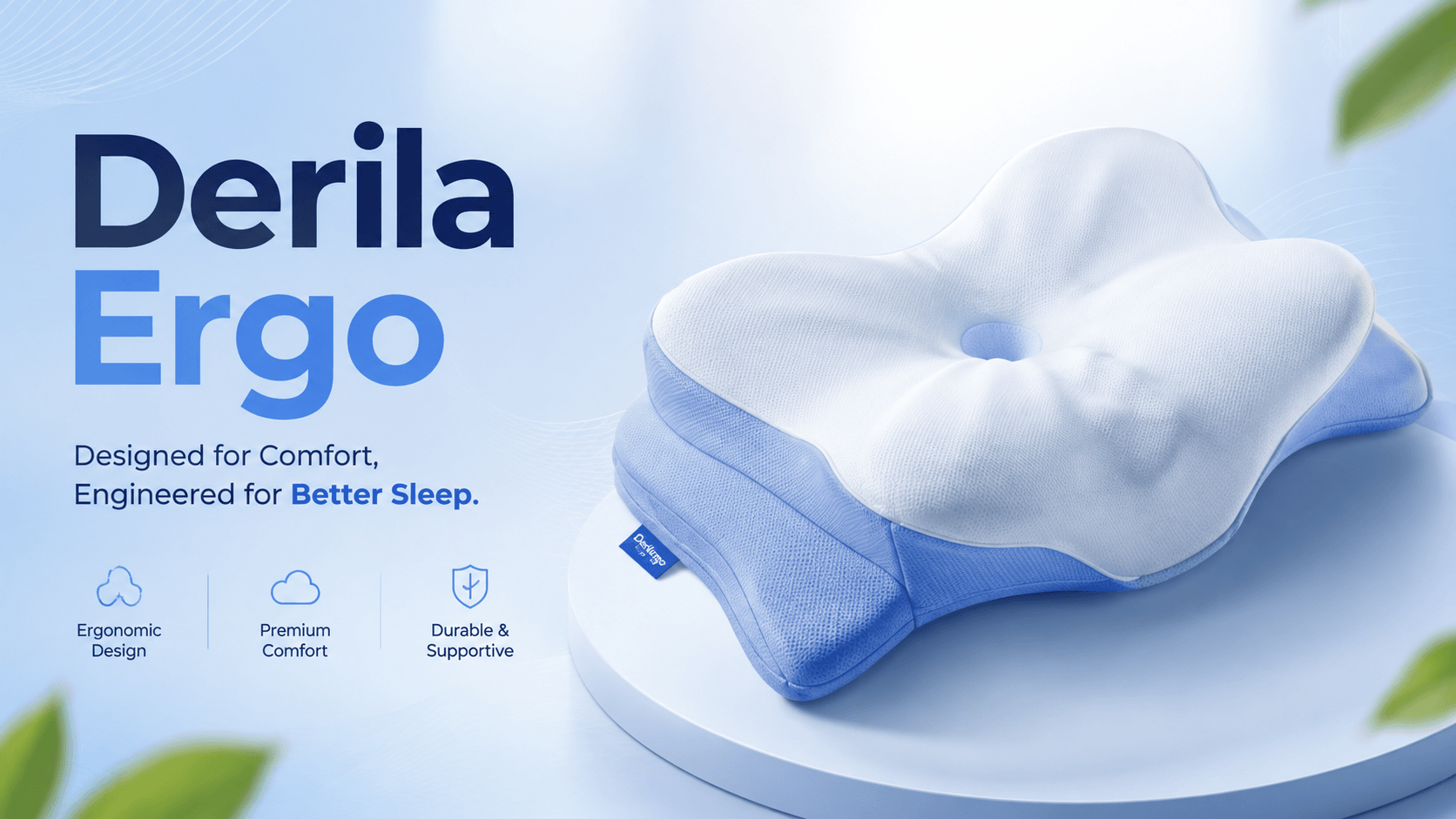
The Derila Ergo is a memory foam pillow with a butterfly-shaped design — a contoured cutout down the center meant to cradle the head while raised wings on either side support the neck and shoulders. It’s marketed as a fix for neck pain, poor sleep posture, and general discomfort, and it’s sold almost entirely through online ads and direct-to-consumer websites rather than in stores.
If you’ve landed here after seeing one of those ads, you’re probably not just wondering what the pillow does. You’re wondering whether the hype around it is real. That’s a fair question, and it deserves a straight answer.
What the Design Is Actually Trying to Do
Contour pillows like this one aren’t a new idea. The basic principle behind a butterfly or “wave” shape is well established in sleep science: a cutout for the head keeps the neck from tilting too far forward or backward, while the raised side sections fill the gap between the ear and shoulder when you’re lying on your side. Done well, this can help keep the neck closer to a neutral position overnight.
That said, “closer to neutral” is a modest, incremental benefit — not a medical treatment. Be cautious of any pillow marketing that implies it can diagnose, prevent, or cure a health condition, including sleep apnea or chronic pain. A pillow can support posture. It can’t replace a doctor.
Materials and Comfort
The pillow uses standard memory foam, which softens with body heat and slowly returns to shape. Some listings mention a cooling or breathable outer cover, which is common across this pillow category and helps offset the heat retention memory foam is known for.
One detail worth checking before you buy: whether the specific listing you’re looking at discloses a CertiPUR-US certification or another recognized foam-safety standard.
Not every version of every online pillow listing includes this information clearly, and it’s worth confirming directly on the seller’s own product page rather than assuming it applies.
Who Tends to Notice a Difference
Based on how this style of pillow generally performs, the people most likely to feel a real improvement are:
- Side and back sleepersdealing with mild, posture-related neck stiffness
- People currently using a flat, worn-out, or unsupportive pillow
- Sleepers who run warm and want a firmer, more structured feel than a standard down or fiber pillow
People who already sleep on a supportive pillow, stomach sleepers (who generally need a flatter profile), or anyone with a diagnosed spinal or neurological condition are less likely to see a dramatic change — and should talk to a doctor or physical therapist before treating any pillow as a solution.
The Part You Should Actually Pay Attention To: How It’s Marketed
Here’s where a lot of “Derila Ergo” search traffic actually comes from. Products in this space are often sold through funnels that lean heavily on:
- Countdown-timer discounts(“70% off today only”) that reset or reappear on repeat visits
- Testimonials that may use stock photos or altered names, rather than verifiable customer identities
- Emotional, medical-sounding claims— language about nerve pressure, chronic pain “reversal,” or sleep apnea relief — that go well beyond what a pillow can be expected to do
- Vague or missing sourcingfor any statistics or “clinically tested” language used in ads
None of this automatically means the item you receive is fake or that the company won’t ship a real product. But it does mean the marketing is doing more selling than informing, and it’s worth treating the ad copy with more skepticism than the pillow itself.
Before You Buy: A Practical Checklist
| Check This | Why It Matters |
| Return window and conditions | Some retailers require original packaging or charge return shipping — know this before opening the box |
| Refund process, in writing | Look for a specific number of days and a real support contact, not just “guarantee” language |
| Shipping origin and timeframe | Direct-to-consumer pillows are frequently shipped from overseas, which can mean multi-week delivery |
| Price across multiple listings | The same product often appears at different prices on different sites — compare before assuming a “deal” |
| Health claims | Anything suggesting diagnosis or treatment of a medical condition should be treated as marketing, not medical advice |
Is It Worth Buying?
If you strip away the urgency-driven ad copy, what’s left is a contoured memory foam pillow — a legitimate, common product category that can genuinely help some sleepers with mild neck discomfort.
Whether the Derila Ergo specifically is worth your money comes down to ordinary consumer questions: Does the price match similar contour pillows elsewhere? Is the return policy something you’re comfortable with? Are you buying it for a reasonable reason (comfort, support) rather than because an ad promised a medical fix?
Answer those honestly, and you can make the call the same way you would for any other pillow — on comfort, price, and return terms, not on how urgent the ad made it feel.
FAQs
Is the Derila Ergo pillow a scam?
Based on available information, sellers appear to ship an actual physical pillow rather than taking payment for nothing. The bigger concern reported by buyers and reviewers is aggressive, sometimes misleading marketing — urgency discounts, questionable testimonials, and health claims that outrun the evidence — not an outright non-delivery scam.
Does it help with neck pain?
Contour memory foam pillows can help some people maintain better neck alignment, which may ease mild, posture-related discomfort. It is not a substitute for medical evaluation of ongoing or severe pain.
Can it treat sleep apnea?
No pillow can diagnose or treat sleep apnea. If you suspect you have it, see a doctor for proper testing and treatment.
How do I know if a Derila Ergo listing is legitimate?
Check for a clear return policy with specific timeframes, a real customer service contact, and consistent product descriptions. Be cautious of listings that rely mainly on countdown timers and dramatic before/after claims instead of concrete product details.