
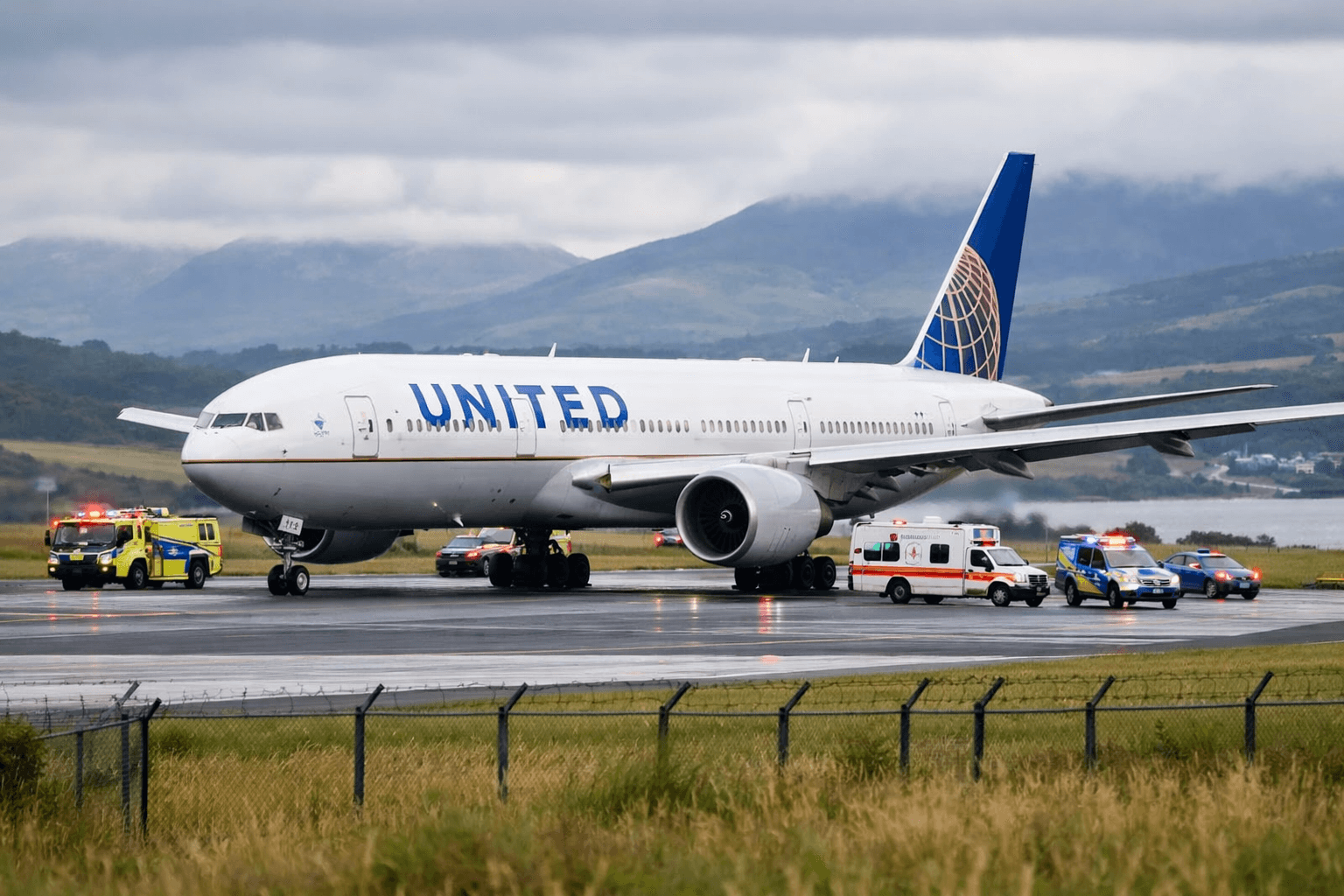
Imagine sitting comfortably at 40,000 feet, crossing the vast Atlantic Ocean, when suddenly your aircraft makes a dramatic U-turn. For passengers aboard United Flight UA109 Diversion on October 30, 2025, this wasn’t imagination—it was reality. What began as a routine journey from Munich to Washington Dulles transformed into an unscheduled stop in Dublin, Ireland, reminding us all that in aviation, safety always comes first, no matter the inconvenience.
This comprehensive guide explores everything you need to know about the UA109 diversion incident, the protocols that saved the day, and what it reveals about modern aviation safety.
What Happened During the United Airlines Flight UA109 Diversion?
On October 30, 2025, at 9:00 AM Central European Time, United Airlines Flight UA109 departed from Munich International Airport (MUC)bound for Washington Dulles International Airport (IAD). The aircraft, a state-of-the-art Boeing 787-8 Dreamliner registered as N28912, carried passengers expecting a smooth nine-hour transatlantic crossing.
The Critical Moment Over the Atlantic
Approximately 90 minutes into the flight, while cruising over the North Atlantic about 500-600 nautical miles west of Ireland, the flight crew faced an unexpected challenge. A flight attendant medical emergency began unfolding—not a life-threatening cardiac event or severe injury, but something that still demanded immediate attention.
The crew member reported worsening pain from a blister, which made it difficult to continue with the remainder of the 9-hour flight. While this might seem minor to passengers, the crew medical issue represented a significant operational concern that required careful assessment.
The U-Turn Decision
Aviation enthusiasts and flight trackers watching Flight Aware and similar platforms witnessed something dramatic: the aircraft performed a U-turn over the North Atlantic, reversing course from its westward trajectory toward an eastward heading back to Dublin.
This wasn’t a hasty decision. The flight diversion protocol involved multiple considerations:
- Assessment of the crew member’s condition
- Evaluation of available alternate airports
- Fuel calculations and aircraft performance
- Weather conditions at potential diversion points
- Ground support availability
- Impact on overall flight operations
Why Dublin? Understanding ETOPS and Alternate Airports

Many passengers wondered: why Dublin specifically? The answer lies in modern aviation regulations and strategic planning.
Dublin’s Role as an ETOPS Alternate Airport
Dublin Airport serves as a well-equipped ETOPS (Extended Twin-Engine Operations)alternate airport for transatlantic routes, strategically positioned to handle medical emergencies and provide swift support for diverted flights.
ETOPS certification allows twin-engine aircraft like the Boeing 787 Dreamliner to fly extended routes over oceans and remote areas, provided they remain within a specified flying time of a suitable diversion airport. Dublin’s location makes it an ideal choice for North Atlantic crossings.
Key advantages of Dublin as a transatlantic diversion airport include:
- Strategic geographic position: Perfectly located on the great circle route between Europe and North America
- 24-hour operational capability: Fully staffed medical and emergency services
- Advanced medical facilities: Equipped to handle various in-flight emergencies
- Quick turnaround infrastructure: Efficient ground handling for diverted flights
- ETOPS certification: Meets all requirements for emergency twin-engine operations
- Weather reliability: Generally favorable conditions for emergency landings
Dublin is frequently chosen as a diversion point for transatlantic flights, especially in medical emergency situations, owing to its location and preparedness for handling in-flight medical emergencies.
The Boeing 787 Dreamliner: Technology Meets Safety
The aircraft involved in the UA109 emergency landing was a Boeing 787-8 Dreamliner, one of aviation’s most technologically advanced aircraft.
What Makes the Dreamliner Special?
The Boeing 787-8 represents a revolutionary approach to aircraft design:
- Composite construction: 50% carbon-fiber-reinforced polymers, reducing weight and improving fuel efficiency
- Advanced electrical systems: Replacing traditional pneumatic systems with electrical architecture
- Enhanced passenger comfort: Lower cabin altitude, better humidity control, and larger windows
- Fuel efficiency: 20% more efficient than comparable aircraft
- Extended range capability: Perfect for long-haul transatlantic routes
These features didn’t just make the flight more comfortable—they contributed to the safe execution of the flight diversion by providing pilots with advanced systems for navigation, communication, and aircraft management.
Inside Aviation’s Medical Emergency Protocols
Medical emergencies occur on approximately 1 of every 604 commercial flights, making them relatively common in the aviation industry. Understanding how airlines handle these situations reveals the sophisticated safety net protecting every passenger.
The Decision-Making Process for Flight Diversions
When a medical emergency on flight occurs, cabin crew follows a carefully choreographed protocol:
- Initial Assessment: Flight attendants perform preliminary evaluation using training in emergency first aid procedures
- Ground-Based Medical Consultation: Most airlines contract with services like MedLink or StatMD, providing 24-hour physician consultations via satellite phone
- Captain’s Decision: The pilot-in-command makes the final diversion decision, considering medical advice, fuel status, weather, and suitable airports
- Communication: Coordination with air traffic control and destination airport for medical services
Unless the situation is considered immediately life threatening, flight crew uses the time between first notification and assessment completion to consider diversion options and implications.
What’s in an Aircraft Emergency Medical Kit?
U.S. carrier aircraft with ≥1 flight attendant are required to have a U.S. Food and Drug Administration–approved automated external defibrillator, ≥1 first aid kit, and an emergency medical kit (EMK) in the passenger cabin.
These kits contain:
- Cardiovascular medications
- Blood pressure monitoring equipment
- Airway management tools
- Injectable medications for severe allergic reactions
- Diagnostic equipment including stethoscopes
- Automated External Defibrillators (AEDs)
The Flight Timeline: From Munich to Dublin to Washington
Let’s reconstruct the complete timeline of the United Airlines UA109 incident:
9:00 AM CET – Departure from Munich International Airport
10:30 AM CET (approx.) – Medical issue reported over North Atlantic
10:45 AM CET – Decision made to divert; aircraft performs U-turn
3:00 PM GMT – Safe landing at Dublin Airport
Medical assessment completed – Crew member deemed stable, no hospitalization required
4:15 PM GMT – Departure from Dublin, resuming journey to Washington
6:30 PM EST – Arrival at Washington Dulles International Airport, experiencing a delay of approximately two hours
Passenger Rights and Airline Responsibilities During Diversions
When your transatlantic flight makes an unexpected stop, understanding your rights helps manage the situation:
What Airlines Must Provide
- Safety assurance: The paramount responsibility to ensure passenger wellbeing
- Communication: Regular updates about the situation and revised timing
- Ground support: Coordination with diversion airport for passenger services
- Rebooking assistance: Help with connecting flights affected by delays
What Passengers Should Know
- Diversions for medical emergencies typically aren’t compensated as they’re considered extraordinary circumstances
- Travel insurance may cover expenses from significant delays
- Airlines prioritize safety over schedule adherence—always
- Crew decisions during emergencies are final and protect everyone onboard
The Statistics Behind In-Flight Medical Emergencies
Understanding the broader context helps appreciate why aviation medical protocols exist:
Twenty-four to 130 in-flight medical emergencies are estimated to occur per 1 million passengers, though the wide range reflects different classification systems used globally.
Most Common In-Flight Medical Issues
The most common emergencies include syncope or presyncope, respiratory symptoms, or nausea and vomiting.
Diversion Statistics
Approximately 4% to 7% of in-flight medical emergencies result in aircraft diversion, with the most common reasons being:
- Cardiac arrest (57.9%)
- Cardiac symptoms (18.4%)
- Obstetric emergencies (18.0%)
- Possible stroke (16.4%)
The UA109 crew medical emergency, while requiring diversion, represented a precautionary measure rather than a life-threatening situation—demonstrating airlines’ commitment to crew welfare and operational safety.
The Human Element: Crew Training and Response
The successful handling of the United Flight UA109 diversion showcased the value of comprehensive crew training.
Flight Attendant Medical Training
Up to 70% of in-flight emergencies are managed by the cabin crew without additional assistance, highlighting their critical role beyond serving beverages and managing luggage.
Cabin crew receive regular training in:
- CPR and automated external defibrillator use
- First aid procedures
- Recognizing medical emergencies
- Communication with ground-based medical services
- Emergency evacuation procedures
- Passenger management during crises
Pilot Decision-Making Under Pressure
Pilots undergo extensive training for handling emergency flight situations, including:
- Rapid assessment of diversion airports
- Fuel management during unplanned route changes
- Communication with multiple parties (ATC, airline operations, medical services)
- Passenger safety prioritization
- Weather evaluation at alternate airports
Lessons from the UA109 Diversion
The October 30, 2025 flight diversion offers several important insights:
1. Safety Culture Works
Airlines’ willingness to divert flights for seemingly minor issues demonstrates their commitment to safety over schedule. A crew member unable to perform duties poses operational risks that outweigh delay costs.
2. Technology Enables Better Decisions
Modern aircraft like the Boeing 787 Dreamliner, with advanced communication systems, allow real-time consultation with ground-based medical professionals, improving decision-making quality.
3. Strategic Airport Planning Matters
Dublin’s role as an ETOPS-certified alternate airport for transatlantic routes ensures that aircraft can divert safely with minimal delay, minimizing passenger inconvenience while maintaining safety.
4. Transparency Builds Trust
United Airlines’ prompt confirmation of the diversion reason and passenger communication helped manage expectations and reduce anxiety.
What Passengers Should Do During Flight Diversions
If you find yourself aboard a diverted flight, here’s how to handle the situation:
Stay Calm and Informed
- Listen carefully to crew announcements
- Ask questions if you need clarification
- Avoid speculation about the emergency
Prepare for Delays
- Contact connecting flights or ground transportation
- Notify people expecting your arrival
- Check airline apps for real-time updates
Follow Crew Instructions
- Remain seated when requested
- Prepare for potential disembarkation
- Keep personal items readily accessible
Document Everything
- Save boarding passes and receipts
- Note timeline of events for travel insurance
- Take photos of departure boards showing delays
The Future of In-Flight Medical Care
Aviation medicine continues evolving with technology:
Telemedicine Integration
Airlines increasingly invest in advanced telemedicine equipment, allowing ground-based physicians to conduct remote examinations through video links and diagnostic equipment.
Enhanced Medical Kits
Standardized, well-equipped medical kits containing essential medications, equipment, and instructions for managing a wide range of medical emergencies are becoming industry standard.
Artificial Intelligence Support
Future systems may incorporate AI to help cabin crew quickly assess symptoms and recommend appropriate responses, improving outcomes for in-flight medical emergencies.
Frequently Asked Questions
Q: Was the United Flight UA109 diversion dangerous?
No, The diversion was a precautionary measure executed smoothly with no injuries reported. Dublin’s facilities and the crew’s training ensured passenger safety throughout.
Q: How common are flight diversions for medical emergencies?
While medical events occur on about 1 in 604 flights, only 4-7% result in diversions. Most medical situations are managed onboard without changing flight plans.
Q: Did passengers receive compensation for the delay?
Medical diversions are typically classified as extraordinary circumstances, meaning compensation isn’t usually required. However, passengers should check their specific airline policies and travel insurance.
Q: What happened to the crew member?
The flight attendant did not require hospitalization upon arrival in Dublin and was deemed stable after medical assessment.
Q: How much does an unplanned diversion cost airlines?
Diversions can cost airlines between $15,000 to over $500,000 depending on the route, aircraft type, passenger rebooking needs, and ground services required.
Q: Can passengers request flight diversions for medical emergencies?
Passengers experiencing medical emergencies should immediately notify cabin crew, who will assess the situation and, if necessary, recommend diversion to the captain.
Conclusion
The United Flight UA109 diversion to Dublin exemplifies modern aviation’s unwavering commitment to safety. While a two-hour delay inconvenienced passengers, the incident demonstrated that:
- Crew welfare directly impacts passenger safety
- Strategic planning with ETOPS alternate airports enables quick, safe responses
- Modern aircraft technology supports better emergency management
- Comprehensive training prepares crews for unexpected situations
- Transparency and communication maintain passenger trust
Next time you board a transatlantic flight, you can feel confident knowing that multiple layers of safety protocols, from ETOPS regulations to advanced medical equipment, work together to protect everyone onboard. The UA109 emergency landing in Dublin wasn’t just about one crew member’s medical issue—it was a testament to an industry that takes safety seriously, every single flight, every single day.
Whether you’re a frequent flyer, an aviation enthusiast, or someone planning their first long-haul flight, understanding these procedures helps demystify airline operations and reinforces why commercial aviation remains one of the safest forms of transportation in the world.