
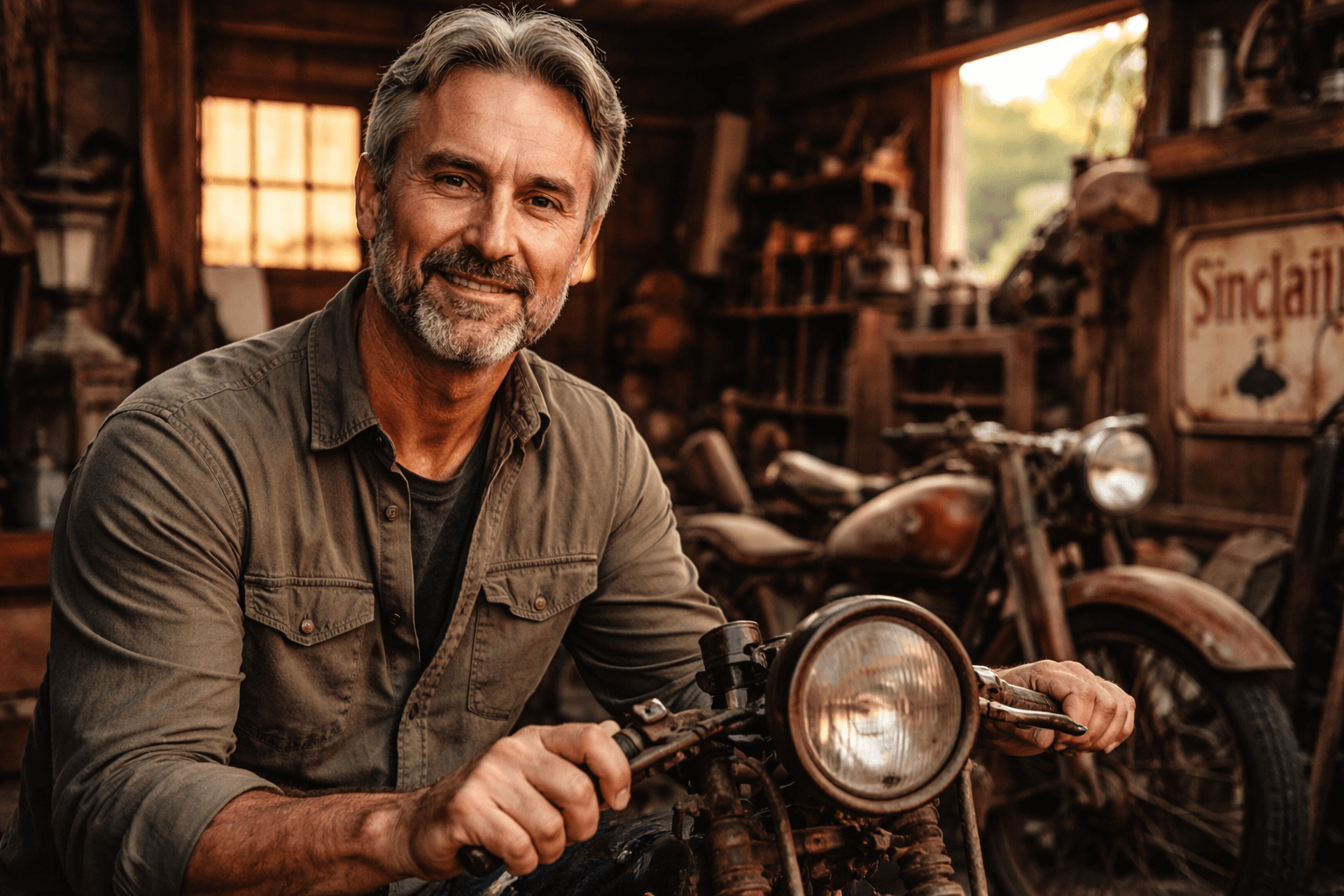
You know that feeling when you drive through a small town and see an old building that just makes you stop? Maybe it’s a gas station from the 1940s with those round pumps out front. Or a downtown storefront with the original sign still hanging there, just waiting for someone to care again. Most of us drive right past. Take a photo maybe. Feel a little sad. Then forget about it by the next exit. Mike Wolfe doesn’t drive past. He stops, buys the building, and brings it back to life.
I’m not talking about flipping houses for profit or some celebrity hobby that’ll be forgotten next year. This is different. This is Mike’s real thing—the work he’d probably be doing even if American Pickers never happened.
And honestly? It’s way more interesting than finding old motorcycles in barns. Let me tell you what he’s actually up to, because it’s pretty damn cool.
So What Exactly Is Mike Wolfe Doing?
Look, I’ll keep it simple. Mike Wolfe’s passion project is about saving old buildings in small towns. But it’s not just about the buildings—it’s about saving the whole vibe, the history, the stories. The stuff that makes a place feel real.
He buys these forgotten buildings that nobody wants anymore. Buildings that would probably get torn down in a few years. Then he fixes them up—but not in that annoying “everything looks brand new” way. He keeps the character. The dents, the old signs, the worn floors. All the stuff that tells you this place has lived.
Then—and this is the cool part—he turns them into spaces people can actually use. Coffee shops. Guest houses. Community hangouts. Places where real people can gather, not just look at from behind a rope.
The Three Big Things He’s Focused On
Saving Old Buildings
Mike’s out there buying up old gas stations, storefronts, warehouses—buildings that have been empty for years. In places like Columbia, Tennessee and his hometown of LeClaire, Iowa, he’s literally changing what these towns look like.
Helping Small Towns Make Money Again
When Mike fixes up a building, tourists show up. When tourists show up, they need coffee, lunch, a place to stay. The local businesses start doing better. People start moving back. It’s like dominoes, but in a good way.
Keeping Old Skills Alive
Through his Two Lanes website and shop, Mike’s helping the people who know how to make stuff the old way. Blacksmiths. Sign painters. Leather workers. People whose skills are dying out because nobody cares about quality anymore.
How Did This Even Start?
Mike didn’t wake up one day and decide to save America. It happened slowly, the way real things usually do.
He’s been picking since he was a kid—literally pulling bikes out of trash when he was six years old. His mom raised three kids alone in Iowa, and Mike learned early that one person’s trash really is another person’s treasure.
For years, he just collected stuff. Built it into a business. Then American Pickers happened, and suddenly he’s famous for digging through barns.
But somewhere in there—probably after visiting his thousandth dying small town—something clicked. Mike realized the buildings were disappearing faster than the stuff inside them. The historic places where American life actually happened were just… vanishing. So he decided to do something about it.
No big announcement. No press conference. He just started buying buildings and fixing them. That’s pretty much how the Mike Wolfe passion project was born.
Two Lanes: Where the Stories Live

If you want to really understand what Mike’s doing, you gotta check out Two Lanes. It’s his website, but it’s not like a normal celebrity merch site. It’s more like… if your cool uncle had a blog and an old general store mixed together.
What Makes Two Lanes Different
Mike posts photos from his travels—real film photos, not Instagram filters. Stories about people he meets. Interviews with craftsmen who are the last ones who know how to do something.
Then there’s stuff you can buy, but it’s not random. It’s leather tool rolls made by some guy in Montana who’s been doing it for 40 years. Enamel mugs from a family pottery shop. Bandanas that actually look cool.
Here’s what nobody talks about: Mike quietly gives money to these craftspeople. Not like charity—more like “hey, keep doing your thing and I’ll help spread the word.” We’re talking $2,000 to $10,000 grants to people who make neon signs by hand or forge metal tools the traditional way.
Then he features them on Two Lanes, which sends customers their way. No strings attached. Just Mike being Mike. The site’s traffic went up 220% in the last six months. People are hungry for this real, slow, meaningful stuff.
The Columbia, Tennessee Story
Want to see the Mike Wolfe passion project in action? Go to Columbia, Tennessee. In May 2025, Mike unveiled what he’d been working on: an old Esso gas station transformed into Columbia Motor Alley. And when I say transformed, I don’t mean “looks like it came from HGTV.”
This place still looks like a gas station. But now it’s got places to sit around a fire pit. Areas where people can hang out. The original bones are all there—the architecture, the feel, the soul.
When they reopened it, over a million people watched online. A MILLION. For a gas station in Tennessee. That tells you something right there.
What It Did for the Town
Columbia’s not the same anymore. Downtown actually has people walking around now. The other businesses are busier. Property values stopped falling. Young families are thinking about moving there instead of leaving. One restored gas station did all that.
LeClaire: Where Mike Calls Home
LeClaire, Iowa is Mike’s adopted hometown, and you can see his fingerprints all over it. He’s got his Antique Archaeology store there—the one from the show. But he’s also restored multiple buildings from the 1880s. Old storefronts that were falling apart are now thriving businesses.
The whole downtown has this energy now. It’s not fake vintage, it’s real vintage that someone actually gave a damn about. Local contractors get work. Property owners see their investments stabilize. Kids grow up seeing that old things are worth saving. That’s the kind of change you can’t buy with a government grant.
Why Everyone’s Suddenly Searching for This
Here’s something wild: Google searches for “Mike Wolfe passion project” have gone up 280% since July. Pinterest boards about “Wolfe-Style Renovation” are up 400%. Why now?
People Are Tired of Fake
We’re drowning in fake everything. Fake wood floors that are actually plastic. Coffee shops that all look identical. Instagram lives that are total BS. Mike’s work is real. The buildings are really old. The repairs are really done right. The community impact is really happening. In 2025, that’s incredibly refreshing.
Small Towns Are Fighting Back
For decades, we’ve been told small-town America is dead. Just move to the city. Nobody stays in places like that anymore. But people DO want to stay. They just need a reason to believe it can work. Mike’s showing them it can.
You Can Actually Do This Too
That’s the beautiful part. Mike’s not keeping secrets. You can volunteer at his restoration projects. You can support the artisans he works with. You can even start your own project in your hometown. It’s not just “wow, look what this rich TV guy did.” It’s “oh damn, I could actually do a smaller version of this.”
COVID Changed How We Think
The pandemic made a lot of us rethink what matters. Community. Meaningful work. Real connections. Slower living. Suddenly Mike’s mission of saving community gathering spaces and honoring real craftsmanship hit different. Way different.
How Mike Actually Does This Work
Mike’s approach isn’t complicated, but it is intentional.
Keep the Imperfections
When Mike restores a building, he keeps the dents. The worn spots on the floor. The faded paint. That’s not laziness—that’s the story. Those marks prove people lived and worked there. He’ll add what’s needed to make the building safe and usable, but he’s not trying to make it look new. New would erase everything that makes it special.
Community First, Money Second
Mike could flip these buildings for profit. Buy cheap, renovate, sell high. That’s what most people do. He doesn’t. He wants these places to serve the community long-term. That means keeping them accessible, keeping the character intact, and actually listening to what locals want.
Real Over Trendy
No subway tile. No shiplap. No Edison bulbs (okay, maybe some Edison bulbs, but vintage real ones). Mike restores things to honor what they were, not to chase Instagram trends. These towns aren’t theme parks. They’re living museums of American culture, and the goal is to help them stay alive and relevant.
Locals Over Outsiders
When Mike does a restoration project, he hires local contractors when possible. He wants people from that town to benefit directly from the work. Not just economically—he wants them to take pride in what’s happening. Because if the locals don’t care, the whole thing fails.
The Motorcycle Thing Makes Sense Now
You might be wondering where vintage motorcycles fit into all this. For Mike, motorcycles aren’t just collectibles. They’re symbols of American freedom and innovation. A 1930s Indian Hillclimber motorcycle represents the same craftsmanship and spirit as the buildings he saves.
When he restores one of these bikes, he’s keeping those skills alive. Metalworking. Problem-solving. Understanding how things were built before everything became disposable.
Plus, restored bikes look amazing displayed in the Two Lanes Guesthouse and other properties. They inspire people to appreciate quality and craftsmanship. And honestly? Mike just loves motorcycles. Always has. At least this passion connects to his bigger mission.
The Money Side of Things
Let’s talk real talk for a second. Does this actually work financially?
It Creates Jobs
When Mike restores a building, local contractors work. Material suppliers get business. Then when it opens, there are permanent jobs—baristas, shop workers, maintenance people.
It Brings Tourists (The Good Kind)
Heritage tourism is huge. People will drive hours to see authentic, well-preserved historic places. They spend money on hotels, food, gas, shopping. One restored building can pump thousands of dollars into a local economy.
Property Values Stabilize
When downtown starts looking good again, other property owners start caring more. They fix up their buildings. Suddenly the whole area looks better, and property values stop tanking.
New Businesses Open
Restored storefronts become affordable spaces for new entrepreneurs. A young couple can open a bookshop. A local artist can open a gallery. The town gets more diverse and interesting.
The Ripple Effect
One restoration leads to another. One new business attracts another. It’s not instant, but over a few years, whole downtown areas can come back to life. Mike’s not trying to get rich off this—he’s already got money. He’s trying to prove the model works so other people will copy it.
Want to Get Involved? Here’s How
You don’t need to be on TV or have millions of dollars to participate in what Mike’s doing.
For Regular People Who Like Stories
Drive a backroad you’ve never been on. Find something old and interesting—a diner sign, an abandoned drive-in, whatever. Take a photo. Post it with #MikeWolfePassionProject and tag @twolanes.
Mike reposts three every Friday. Winners get a signed Route 66 map. But honestly, the real prize is joining a community of people who give a damn about this stuff.
For People Who Want to Buy Stuff
Shop at TwoLanes.com. Everything ships directly from the person who made it. You’re not enriching some corporation—you’re helping a blacksmith in Wisconsin keep his shop open. Take a photo when it arrives and tag the maker. That connection matters more than you think.
For Hands-On People
Columbia Motor Alley hosts volunteer days where you can actually help with restoration work. Demo old drywall, catalog vintage finds, learn timber-frame repair. Free lunch included. Check Mike’s social media for dates. Show up. Get your hands dirty. Meet people who care about the same things you do.
For Your Own Town
Find one building in your area that has history and needs help. Start small:
- Research its story at the local library
- Take photos and document it
- Share on social media to build awareness
- Connect with other people who care
- Maybe you can’t buy it, but you can advocate for it
- Or adopt a historic marker that needs cleaning
- Or interview old-timers about what used to be there
The principle is the same no matter the scale. Care. Document. Connect. Act.
What Makes This Different From Normal Preservation
Most historic preservation is run by historians and architects. They focus on keeping buildings exactly as they were, which often means nobody can actually use them. They become museums. Roped-off. Educational but dead.
Mike’s approach is different:
- His buildings are alive and functional
- People can touch things, use spaces, make memories
- Modern updates happen where needed (like bathrooms that work)
- Community participation is encouraged, not restricted
- Private money drives it, so there’s less bureaucracy
- The goal is living history, not frozen history
Traditional preservationists can learn something here: people care more about places they can actually experience, not just look at.
The Challenges Nobody Talks About
Mike makes this look easy on Instagram. It’s not.
Money Problems
Restoring old buildings costs WAY more than building new. Modern contractors often don’t know old techniques. Materials that match the original are expensive or impossible to find.
And small-town projects don’t attract typical investors who want quick returns. Mike can absorb those costs because of American Pickers money. Regular people can’t always do that.
Finding the Right People
Not every contractor knows how to work on a 100-year-old building. You need people who understand old construction methods, who won’t just rip everything out and start over. Those people exist, but they’re not easy to find.
Local Resistance
Believe it or not, some locals prefer new buildings. They see old structures as embarrassing reminders of decline, not as assets worth saving. Getting community buy-in takes time, patience, and a lot of listening.
Time and Patience
This work is SLOW. A restoration that would take three months if you were building new might take a year or more if you’re doing it right. You can’t rush craft. You can’t rush community relationships. You can’t rush quality.
Where This Is All Heading
The Mike Wolfe passion project keeps growing. He’s looking at more towns. More buildings. More partnerships. Educational programs are in the works to teach preservation skills to younger generations. There’s talk of documentary projects that go deeper into the stories behind the buildings and the people who made them.
But the bigger story is cultural. Mike’s work is part of a slow preservation movement that’s gaining steam across America. More people are questioning why we tear everything down. More young people are learning traditional trades. More communities are seeing their old buildings as economic opportunities.
Whether Mike intended it or not, he’s become a symbol of this movement. Proof that you can care about the past without living in it. That preservation can be profitable AND meaningful.
The Bottom Line
Here’s what theMike Wolfe passion project really is:It’s choosing repair over replacement. It’s believing small towns matter. It’s keeping craft alive in an age of mass production. It’s creating gathering spaces in a lonely time. It’s remembering that America’s story lives in these buildings, not just in textbooks.
Mike Wolfe could be doing anything with his fame and money. He could be chilling on a beach somewhere or collecting cars in a climate-controlled garage.
Instead, he’s in Columbia, Tennessee, saving an old gas station. He’s finding blacksmiths who are the last ones who know their craft. He’s showing America that our history is worth fighting for. That’s not a side project. That’s a life’s work. And the best part? He’s inviting all of us to join him.
You don’t need a TV show. You don’t need millions. You just need to care about the place you’re from, and be willing to do something about it.
The Mike Wolfe passion project isn’t asking us to live in the past. It’s asking us to bring the best parts of the past into the future we’re building. Honestly? That’s a mission I can get behind.
Your Questions Answered
What exactly is Mike Wolfe’s passion project?
It’s his ongoing work to save historic buildings, support traditional craftspeople, and help small towns come back to life. Less TV stuff, more real community impact.
Is this connected to American Pickers?
The show gave him the platform and money to do this, but the passion project is separate. It’s what he’d probably be doing either way.
Where can I see these restored buildings?
Columbia, Tennessee has Columbia Motor Alley. LeClaire, Iowa has his Antique Archaeology store and other restored buildings. Some are open to the public, others are private but visible from the street.
Can normal people help with this?
Absolutely. Buy from artisans on TwoLanes.com. Volunteer at restoration events. Start preservation work in your own town. Share stories on social media. Every bit helps.
Is Mike making money from this?
He’s not trying to get rich off these projects. The focus is on community benefit and cultural preservation, not profit. He’s already got money from the show.
Why should I care about old buildings?
Because they tell our story. Because they were built with skill we’re losing. Because they give towns character and identity. Because once they’re gone, they’re gone forever.
How is this different from gentrification?
Mike focuses on keeping spaces accessible to locals, not pushing them out. He hires local people, preserves affordability, and listens to community needs. It’s revitalization, not replacement.
What’s Two Lanes?
Mike’s website and shop where he sells stuff from traditional craftspeople and shares stories from his travels. It’s part store, part blog, part cultural archive.
Why This Matters Right Now
We live in a weird time. Everything’s fast, digital, disposable. Amazon delivers in two hours. Apps replace experiences. Chain stores make every town look the same.
The Mike Wolfe passion project is the opposite of all that. It’s slow. It’s physical. It’s permanent. It’s local. It’s real. And apparently, a lot of us are hungry for that. The numbers don’t lie—people are searching for this, following this, wanting to be part of this.
Maybe it’s because we’re tired of fake. Maybe it’s because the pandemic reminded us that community matters. Maybe it’s because we can feel something important slipping away, and we want to grab onto it before it’s gone.
Whatever the reason, Mike’s tapped into something bigger than buildings. He’s tapped into our need for connection, meaning, and continuity.
The buildings are just the beginning. The real thing he’s restoring is our belief that places matter, that history matters, that craft matters, that community matters. And damn, do we need that right now.
Final Thoughts
I started researching Mike Wolfe’s passion project thinking it was just another celebrity thing. Rich guy buys old stuff, gets some good PR, moves on. I was completely wrong.
This is real. The impact is measurable. The philosophy is sound. The community response is genuine. This isn’t about Mike’s ego—it’s about America’s heritage.
Will every small town be saved? No. Is this scalable to every community? Probably not. Are there challenges and limitations? Absolutely! But that’s not the point. The point is someone with a platform is using it to say: “These places matter. These skills matter. These stories matter. And I’m going to prove it.”
In a world that increasingly feels like it’s forgetting where it came from, that’s revolutionary.
So whether you visit Columbia Motor Alley, buy a leather tool roll from Two Lanes, volunteer at a restoration site, or just start documenting history in your own hometown—you’re part of something good.
You’re part of the Mike Wolfe passion project. And it’s bigger than one man, one show, or one restored building. It’s about deciding that America’s past deserves a future.