
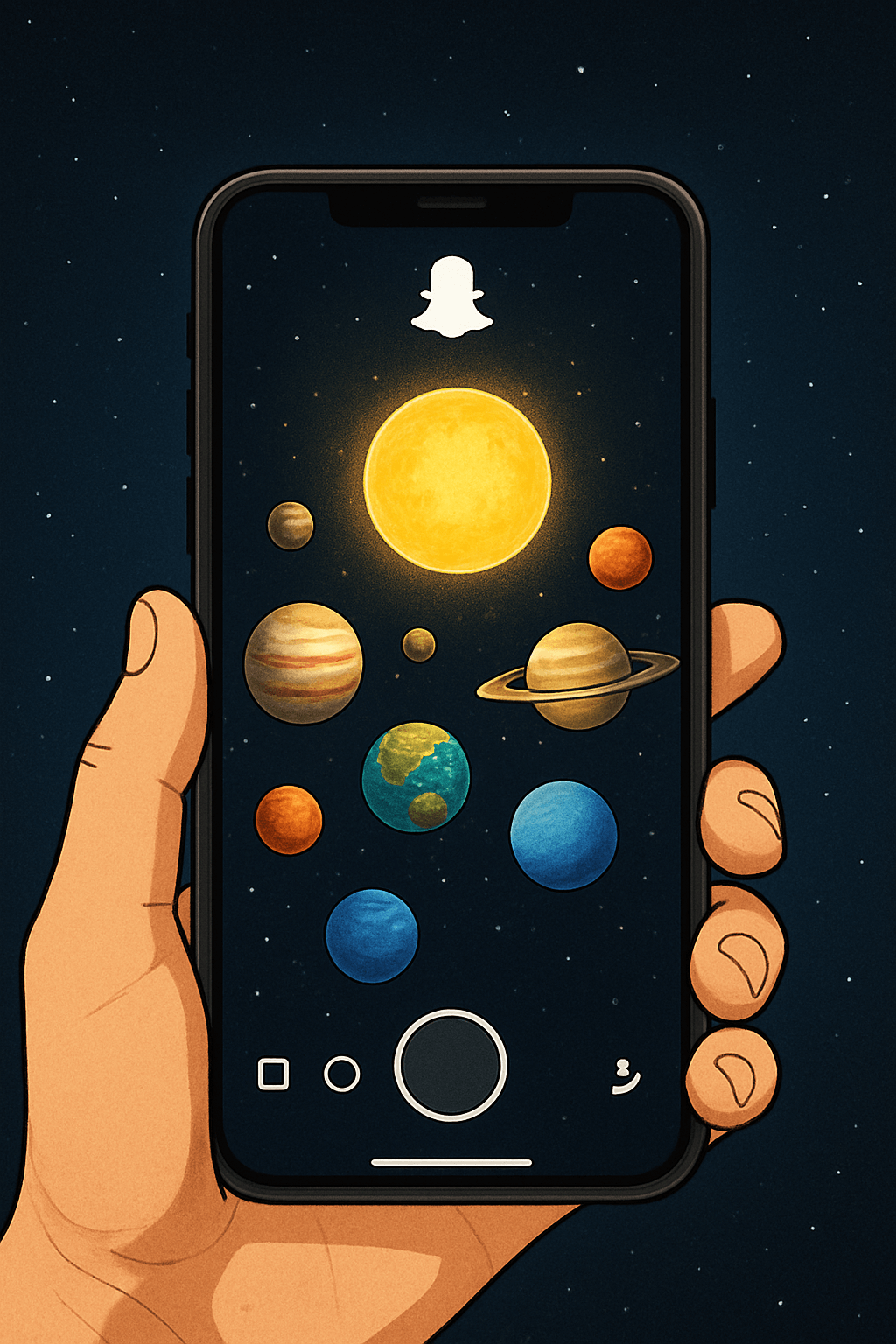
Have you ever wondered who truly matters most in your Snapchat universe? Not in a superficial way, but in that tangible, daily-interaction way that actually reflects your digital life? If you’ve seen those mysterious planet badges on your friends’ profiles or heard whispers about the Snapchat Friend Solar System, you’re not alone.
Thousands of users are discovering this captivating feature that transforms their closest connections into a cosmic visualization that’s equal parts fun, competitive, and surprisingly insightful.
The Snapchat Solar System isn’t just another gimmick—it’s a revolutionary way to understand your social circle through the lens of planetary orbits, where you’re the Sun and your best friends become planets revolving around you.
Whether you’re trying to decode what that Mercury badge means, wondering why you’re stuck as Neptune in someone else’s system, or simply curious about this Snapchat Plus exclusive feature, this comprehensive guide will illuminate every corner of your digital galaxy.
What Is the Snapchat Solar System? Understanding the Friend Planets Feature

The Snapchat Solar System, also known as the Snapchat Friend Solar System or Snap Planets, is a premium feature available exclusively to Snapchat Plus subscribers. Launched as part of Snapchat’s paid subscription service, this innovative tool takes the concept of best friends lists and reimagines them as a miniature solar system where relationships are visualized through planetary positions.
Here’s how the Snapchat Planet system works: You become the Sun at the center of your personal solar system, while your eight closest friends are assigned planets based on your interaction frequency with them.
The person you snap and chat with most becomes Mercury (the closest planet to the Sun), your second-best friend becomes Venus, and so on through all eight planets in our solar system’s order—Mercury, Venus, Earth, Mars, Jupiter, Saturn, Uranus, and Neptune.
What makes this Snapchat friendship ranking system particularly fascinating is its dynamic nature. The planet positions aren’t static—they shift and change based on your actual Snapchat activity, including the number of snaps exchanged, chat messages sent, Snapstreak maintenance, and overall engagement with each friend. It’s like watching your social universe expand, contract, and evolve in real-time.
Unlike traditional best friends indicators that simply show names, the Snapchat Planets feature adds a visual, gamified layer that makes friendship dynamics more engaging and, admittedly, sometimes more competitive. Each planet comes with its own unique design, complete with distinct colors, hearts, stars, and decorative elements that hint at the strength and nature of each connection.
How Does the Snapchat Solar System Work? The Science Behind Friend Rankings
Understanding the mechanics behind the Snapchat Friend Solar System requires diving into how Snapchat’s algorithm determines your closest friends and assigns them to specific planetary positions. The system operates on a straightforward principle: proximity equals frequency, and frequency equals intimacy in your Snapchat world.
The Ranking Algorithm Explained
The Snapchat Planet order is determined by Snapchat’s proprietary algorithm that analyzes multiple interaction metrics. While the exact formula remains Snapchat’s secret, the platform evaluates several key factors:
Snap Exchange Volume: The total number of photo and video snaps you send and receive from a friend plays the most significant role. Regular daily snapping moves someone closer to your Sun.
Chat Message Frequency: Text conversations matter too. The Friends and Best Friends distinction partly relies on how often you engage in written conversations beyond just snapping.
Snapstreak Consistency: Maintaining Snapstreaks (consecutive days of snap exchanges) significantly boosts someone’s ranking. A 100+ day streak virtually guarantees them a prime position in your solar system ranking.
Story Interactions: Viewing their stories, and them viewing yours, contributes to the relationship strength calculation, though to a lesser degree than direct snaps.
Recent Activity Weighting: The algorithm prioritizes recent interactions more heavily than older ones, meaning your Snapchat Planet positions can shift relatively quickly if your chatting patterns change.
Best Friends vs. Friends Badge: What’s the Difference?
When you visit someone’s profile in your Snapchat Solar System, you’ll encounter one of two badge types, and understanding the distinction is crucial:
Best Friends Badge (with a gold ring): This indicates mutual top-eight status—you’re both among each other’s eight closest friends. It’s the Snapchat friendship gold standard, signaling a reciprocal, strong connection where both parties are actively engaged.
Friends Badge (also with a gold ring): This means you appear in their friend solar system as one of their top eight, but they don’t appear in yours. It’s a one-way street indicating they interact with you more than you interact with them.
The badge system adds an interesting psychological dimension to the Snapchat Planets experience. You can tap either badge to discover exactly which planet you occupy in their system, revealing your precise position in their hierarchy without exposing your entire friend ranking list to them.
Complete Snapchat Planets Order and Meanings: Your Cosmic Friendship Guide
Each planet in the Snapchat Solar System represents a specific ranking and comes with unique visual characteristics that reflect the nature of your friendship. Let’s explore each Snapchat Planet in detail, from the innermost to the outermost orbits.
Mercury – The #1 Best Friend Position
- Position: 1st place in your friend hierarchy
- Visual Design: A red planet surrounded by bright red hearts with scattered stars
- Friendship Meaning: Mercury represents your absolute closest friend on Snapchat—the person you snap, chat, and interact with more than anyone else.
Occupying the Mercury position in someone’s Snapchat Solar System is the ultimate status symbol. This is the friend you likely have multi-hundred-day Snapstreaks with, exchange dozens of snaps daily, and maintain constant communication. The red hearts symbolize the warmth and intensity of this connection.
Venus – The Second-Best Friend
- Position: 2nd place
- Visual Design: A light brown or beige planet adorned with multiple colored hearts—pink, blue, and yellow
- Friendship Meaning: Your Venus friendis your second-closest companion, someone you interact with regularly but slightly less than your Mercury.
While not quite reaching Mercury status, Venus-level friendships still represent solid, consistent connections. You probably chat several times daily, maintain healthy Snapstreaks, and share stories regularly. The multicolored hearts represent a vibrant, diverse friendship that’s still very strong.
Earth – The Third-Ranked Friend
- Position: 3rd place
- Visual Design: A blue and green planet (just like actual Earth) decorated with red hearts, the moon, and stars
- Friendship Meaning: The Earth positionmarks your third-most-frequent contact, a friend who’s definitely important in your Snapchat circle.
Earth friendships are characterized by regular but not constant interaction. You snap each other most days, maintain conversations, and keep up with each other’s stories. The inclusion of the moon and stars suggests a dependable, grounding connection.
Mars – The Fourth-Best Friend
- Position: 4th place
- Visual Design: A red planet with stars and purple-blue hearts
- Friendship Meaning: Your Mars friendoccupies the middle ground of your top eight, representing consistent but moderate interaction levels.
At the Mars ranking, you’re looking at friendships with solid foundations but perhaps less daily intensity. You might snap each other every few days, have occasional Snapstreak gaps, and engage more sporadically. Mars friendships are stable without being all-consuming.
Jupiter – The Fifth Friend Position
- Position: 5th place
- Visual Design: An orange planet (resembling real Jupiter) with no hearts, featuring swirling patterns and stars
- Friendship Meaning: The Jupiter positionindicates a friend you interact with regularly but with noticeable gaps between communications.
Jupiter-level connections typically involve weekly rather than daily interactions. You maintain the friendship through occasional snaps, story views, and periodic catch-ups. The absence of hearts in Jupiter’s design reflects the slightly more distant nature of this ranking.
Saturn – The Sixth-Ranked Friend
- Position: 6th place
- Visual Design: A yellow-gold planet with a distinctive ring (like actual Saturn), surrounded by stars but no hearts
- Friendship Meaning: Your Saturn friendrepresents someone in your extended best friends circle—important enough to make your top eight but not among your daily contacts.
Saturn friendships are characterized by intermittent communication. You might go days or even a week between snaps, interact primarily through story views, and have minimal Snapstreak activity. Saturn’s iconic ring symbolizes that while there’s distance, there’s still a recognizable connection.
Uranus – The Seventh Friend
- Position: 7th place
- Visual Design: A green planet with no hearts, minimal decoration, possibly some stars
- Friendship Meaning: The Uranus positionindicates someone barely making your top eight, with infrequent interactions.
At the Uranus level, friendships are maintained more through passive engagement than active communication. You rarely snap directly, occasionally view stories, and might have abandoned any Snapstreaks. These connections are holding on to their solar system status by a thread.
Neptune – The Eighth and Final Position
- Position: 8th place (last in your friend solar system)
- Visual Design: A blue planet with minimal decorations and no hearts
- Friendship Meaning: Neptune represents the outermost orbit—your eighth-closest friend who’s technically in your best friends rankingbut only just.
Neptune friendships are characterized by rare, sporadic communication. You might go weeks between snaps, have virtually no Snapstreak activity, and interact primarily by accidentally viewing each other’s stories. Neptune’s distant position reflects a connection that’s fading or maintained at minimum levels.
How to Enable and Use the Snapchat Solar System Feature
The Snapchat Solar System isn’t automatically activated—even for Snapchat Plus subscribers. Following feedback about the feature potentially causing anxiety among younger users, Snapchat made it opt-in by default, giving users complete control over whether they want to see their friendship rankings visualized.
Step-by-Step Guide to Enabling Snapchat Planets
- Subscribe to Snapchat Plus: The Solar System featureis exclusively available to Snapchat+ members. If you haven’t subscribed yet, navigate to your profile, tap the Snapchat+ banner, and choose your subscription plan ($3.99 monthly, $21.99 for six months, or $39.99 annually in the US).
- Access Your Snapchat Settings: Open the Snapchat app and tap your Bitmoji or profile icon in the top-left corner to access your profile page.
- Navigate to Snapchat+ Settings: Look for and tap the “Snapchat+“ option in your profile settings area. This will open the dedicated Snapchat Plus features menu.
- Toggle the Solar System Feature: Find the “Friend Solar System”or simply “Solar System” toggle switch. Slide it to the right (ON position) to enable the feature. The toggle typically appears blue or gold when active.
- Explore Friend Profiles: Once enabled, visit your friends’ profiles by searching for them or tapping their names in your chat list. Look for the Best Friends or Friends badge with a gold ringto see their planetary positions.
How to Check Your Planet in Someone Else’s Solar System
Discovering your position in a friend’s Snapchat Planet system is surprisingly simple:
- Open the Snapchat app and navigate to your friends list or search for a specific friend.
- Tap their profile picture or name to open their full profile page.
- Look for either a “Best Friends” badgeor “Friends” badge with a distinctive gold ring around it. If you don’t see this badge, either they’re not a Snapchat Plus subscriber, they haven’t enabled the feature, or you’re not in their top eight.
- Tap the badge to reveal your planet positionin their solar system. The app will display which planet you are (Mercury through Neptune) along with a visual representation.
- Remember the badge type distinction: Best Friendsmeans you’re both in each other’s top eight, while Friends means only you’re in their system, not vice versa.
Disabling the Solar System Feature
If you find the Snapchat Planet rankings stressful, competitive, or simply unnecessary, you can disable the feature at any time:
- Return to your profile settings by tapping your Bitmoji icon.
- Access the Snapchat+settings menu again.
- Locate the Friend Solar System toggleand slide it to the left (OFF position).
- The planet badgeswill immediately disappear from your friends’ profiles, and they’ll no longer be able to see their position in your system (though you’ll still maintain your Snapchat Plus subscription and other premium features).
Understanding Snapchat Plus: The Subscription Behind the Solar System
The Snapchat Solar System exists as just one feature within the broader Snapchat Plus (or Snapchat+) premium subscription service. Launched in June 2022, Snapchat Plus represents the platform’s first major foray into paid subscriptions, offering exclusive features, experimental tools, and early access to new functionality.
What Is Snapchat Plus?
Snapchat Plus is a premium membership tier that provides subscribers with enhanced customization options, exclusive features, and priority support beyond what’s available in the free version of Snapchat. As of December 2025, Snapchat+ has grown to include over 30 exclusive features, making it a comprehensive upgrade for dedicated users.
The subscription operates on a straightforward model: pay a monthly, six-month, or annual fee to unlock all premium features immediately. There’s no tiered system within Snapchat Plus itself (though Snapchat recently introduced Lens+ and Platinum tiers for additional functionality), meaning every Snapchat+ subscriber gets access to the same feature set, including the Friend Solar System.
Snapchat Plus Pricing and Plans (2025)
Snapchat Plus subscription costs vary by region and commitment length. Here’s the standard pricing structure as of December 2025:
Monthly Plan: $3.99/month (United States)
Six-Month Plan: $21.99 (saves roughly 8% compared to paying monthly)
Annual Plan: $39.99/year (saves approximately 17% compared to monthly payments)
Regional Pricing Variations:
- India: ₹49/month (significantly cheaper than US pricing)
- UK, Canada, Australia: Approximately equivalent to US pricing with currency conversion
- Lens+ Tier: $8.99/month (includes all Snapchat+ features plus exclusive AR lenses)
- Platinum Tier: $14.99/month (includes ad-free experience plus all standard and Lens+ features, available in select regions)
Most regions also offer a 7-day free trial for new subscribers, allowing you to test Snapchat Plus features including the Solar System before committing to payment. Subscriptions are managed through your device’s app store (Apple App Store or Google Play Store) and can be canceled anytime without penalty.
Key Snapchat Plus Features Beyond the Solar System
While the Friend Solar System is arguably the most talked-about Snapchat+ feature, subscribers gain access to a robust suite of additional tools:
Story Customization:
- Story Timer: Extend story visibility from 1 hour up to 1 week instead of the standard 24 hours
- Story Rewatch Indicator: See exactly how many friends rewatched your stories
- Story Boost: Push your story to the top of friends’ feeds once weekly
- Story Timestamps: Track when specific friends last viewed your stories
Snapstreak Enhancements:
- Snapstreak Restore: Recover lost Snapstreaks up to 5-6 times per month (a lifesaver for maintaining long streaks)
- Snapstreak Reminder: Get alerts one hour before your streak is about to end
Customization Options:
- Custom App Icons: Choose from hundreds of unique Snapchat icons
- Chat Wallpapers: Set personalized backgrounds for individual chats (including AI-generated options)
- Bitmoji Backgrounds: Exclusive profile backgrounds to showcase your subscription
- Custom Notification Sounds: Assign unique sounds to specific friends
Social Features:
- Best Friends List Management: View up to 16 friends and see who’s moved up or down in your rankings
- Ghost Trails: See where your friends have been on Snap Map over the last 24 hours (privacy-controversial feature)
- Peek a Peek: Know when friends are viewing your shared chats
Priority Support: Direct access to Snapchat’s support team with faster response times
The Psychology Behind Snapchat Planets: Why Rankings Matter
The Snapchat Solar System isn’t just a technical feature—it’s a fascinating case study in digital relationship psychology and the gamification of social connections. Understanding why these planetary rankings resonate so strongly with users (and sometimes create stress) requires examining both the benefits and potential drawbacks.
The Positive Impact: Friendship Visualization and Engagement
For many users, the Snapchat Friend Solar System provides valuable insights into their social patterns. It offers:
Relationship Awareness: The planet positions make interaction patterns visible, helping you recognize which friendships you’re actively maintaining versus those that have drifted.
Gamification Motivation: The system creates gentle competition that encourages more frequent communication. Friends playfully compete to “move up” in each other’s solar systems, which can strengthen bonds.
Conversation Starters: Discovering you’re someone’s Mercury or being surprised you’ve dropped to Neptune can spark meaningful conversations about the friendship itself.
Digital Connection Validation: For long-distance friendships or relationships maintained primarily through social media, seeing tangible evidence of closeness through planetary rankings provides reassurance.
The Criticism: Mental Health Concerns and Social Anxiety
However, the Snapchat Planet system has faced significant scrutiny, particularly regarding its impact on younger users. A 2023 Wall Street Journal investigation highlighted several concerns:
Quantified Friendship Anxiety: Reducing complex human relationships to numerical (or planetary) rankings can create stress, especially when you discover you’re not as highly ranked as you expected in someone’s solar system.
FOMO and Exclusion: Not appearing in someone’s top eight at all—or dropping from a high planet to a lower one—can trigger feelings of rejection and social exclusion.
Obsessive Monitoring: Some users report compulsively checking their planet positions and feeling pressured to maintain or improve their rankings through forced interactions.
Teen Mental Health Impact: Adolescents, who are already navigating complex peer relationships and social hierarchies, may be particularly vulnerable to the anxiety that visible friendship rankings can create.
Authenticity Concerns: The gamification might encourage performative friendships—snapping someone purely to maintain a high planet ranking rather than genuine connection.
Snapchat’s Response: Making Solar System Optional
In response to the mental health concerns, Snapchat took a significant step: turning the Friend Solar System feature off by default for all new subscribers. According to Snapchat’s official statement, the company acknowledged that while the feature received “overwhelmingly positive feedback” from users who chose to use it, they understood that “even though it can feel good to know you are close to someone, it can also feel bad to know that you aren’t as close to a friend as you’d like to be.”
Snapchat’s data revealed that less than 0.25% of their community uses the Solar System feature daily, suggesting that while it’s popular among certain user segments, the vast majority either aren’t aware of it, can’t access it (non-subscribers), or choose not to enable it.
The platform emphasized their commitment to making online communication feel positive and supportive: “We are deeply committed to making a positive impact with our service. Snapchat is designed to facilitate close friendships, support them, and celebrate them.”
Strategies to Improve Your Snapchat Planet Position (And Whether You Should)
If you’ve discovered you’re occupying a distant planet position in someone’s Snapchat Solar System—or you simply want to move up from Neptune to Mercury—there are legitimate strategies to improve your ranking. However, it’s worth asking yourself first: should you?
How to Climb the Planetary Ladder
Increase Daily Snap Frequency: The single most effective method to improve your Snapchat Planet ranking is sending more direct snaps to the friend whose system you want to climb in. Daily snaps, even simple ones, significantly impact the algorithm.
Maintain Snapstreaks Consistently: Starting and maintaining a Snapstreak signals ongoing commitment to the friendship. 100+ day streaks virtually guarantee top-three planetary positions.
Engage in Text Conversations: Don’t rely solely on photo snaps. Regular chat messages contribute to your interaction score and demonstrate deeper engagement than just sending pictures.
View and React to Stories: While less impactful than direct snaps, consistently viewing their stories and sending reactions shows passive engagement that the algorithm recognizes.
Use Snapchat Features Together: Engaging with shared features like Bitmoji games, location sharing on Snap Map, or collaborative stories can boost your connection metrics.
Be Consistently Active: The algorithm weights recent activity heavily, so sporadic bursts of intensive snapping are less effective than steady, regular communication over weeks and months.
The Important Question: Should You Try to Change Your Position?
Before embarking on a campaign to alter your Snapchat Planet position, consider these important perspectives:
Authentic Relationships Matter More: A friendship that requires forced, inauthentic snapping just to maintain a high planetary ranking probably isn’t serving either person well. Real connections develop naturally.
Communication Should Be Natural: If you’re not someone’s Mercury or Venus, it might simply reflect reality—you’re friends, but not daily-communication-level friends, and that’s perfectly okay. Not every friendship needs to be (or should be) your closest one.
Focus on Quality Over Ranking: A few meaningful conversations and genuine interactions matter more than hundreds of empty “streak snaps” designed purely to maintain a position.
Respect Their Social Circle: Just because you value someone highly doesn’t mean they must reciprocate the same level of daily communication. People have different capacities for social interaction.
Consider Disabling the Feature: If you find yourself obsessively checking planet positions or feeling hurt by rankings, the healthiest choice might be turning off the Friend Solar System entirely.
Troubleshooting Common Snapchat Solar System Issues
Despite its relatively straightforward design, users frequently encounter problems with the Snapchat Friend Solar System. Here are solutions to the most common issues:
I Can’t See the Solar System Feature
Problem: The Solar System toggle doesn’t appear in your settings, or you can’t see planet badges on friends’ profiles.
Solutions:
Verify Your Subscription: Ensure you have an active Snapchat Plus subscription. Check in Settings > Snapchat+ to confirm your membership status.
Update Your App: Outdated versions of Snapchat may not support the feature. Go to your device’s app store and update to the latest version.
Enable the Feature: Remember, the Solar System is off by default. Navigate to Settings > Snapchat+ > Friend Solar System and toggle it ON.
Regional Availability: Confirm Snapchat Plus is available in your country. The service operates in 25+ countries but isn’t universal yet.
Account Age Requirements: Some features have minimum account age requirements. Very new accounts might need to wait before accessing certain Snapchat+ features.
The Planet Badges Don’t Appear on Friend Profiles
Problem: You have Snapchat Plus, the feature is enabled, but you’re not seeing badges.
Solutions:
Check Their Subscription: Both you AND your friend must be Snapchat Plus subscribers for mutual visibility. If they’re not subscribed, you won’t see planet information on their profile.
Verify They Enabled It: Even if they have Snapchat+, they must have enabled the Friend Solar System feature in their settings. If it’s off, badges won’t appear.
Confirm Top Eight Status: Badges only appear if you’re in their top eight friends. If you’re not, there’s no badge to see—it doesn’t mean the feature is broken.
Wait for Algorithm Update: Sometimes the algorithm takes time to process new interaction patterns. If you’ve only recently started snapping regularly, allow 24-48 hours for rankings to update.
My Planet Position Seems Wrong or Doesn’t Change
Problem: You think you should be ranked higher based on your interaction frequency, or your position never seems to update despite increased communication.
Solutions:
Understand the Algorithm: The system considers multiple factors beyond just snap count—chat frequency, story views, Snapstreaks, and recency all matter. Your perception might not match the algorithm’s calculation.
Remember Bidirectional Nature: If they’re snapping someone else more than you, you’ll naturally rank lower regardless of how much you snap them.
Allow Time for Updates: Planet positions don’t update in real-time. Changes typically reflect after 24-48 hours of altered behavior patterns.
Check for Technical Issues: Try logging out and back into Snapchat, clearing the app cache, or reinstalling if positions seem completely frozen.
The Feature Is Causing Friendship Problems
Problem: The visible rankings are creating tension, hurt feelings, or awkward conversations in your friendships.
Solution: This is the most important troubleshooting section. Remember that Snapchat designed the disable option specifically for this reason. If the Solar System is negatively impacting your relationships or mental health:
Disable It Immediately: Go to Settings > Snapchat+ > Friend Solar System and turn it OFF. Your subscription remains active with all other features intact.
Have Honest Conversations: If a friend seems upset about their planetary position, explain that algorithm-based rankings don’t reflect the actual value you place on the friendship.
Remind Yourself It’s Just Data: The Snapchat algorithm knows nothing about the depth, history, or importance of your relationships—it only measures app-based interactions.
Consider Canceling Snapchat Plus: If the premium features aren’t providing sufficient value to justify potential friendship stress, canceling the subscription entirely is a valid choice.
The Future of Snapchat Social Features: What’s Next After Planets?
The Snapchat Solar System represents just one evolution in the platform’s ongoing effort to gamify and visualize social connections. Looking at current trends and Snapchat’s development patterns, what might the future hold for Snapchat social features?
Potential Enhancements to the Current System
More Planets: While our actual solar system stops at eight planets, Snapchat could expand the system to include more friends, perhaps adding dwarf planets (Pluto and others) to represent friends 9-15 in your rankings.
Constellation View: Instead of just individual planet positions, a “galaxy view” could show all your friend groups as different constellations, visualizing various social circles.
Historical Tracking: The ability to see how planet positions have changed over time—a “friendship timeline” showing when someone moved from Mars to Venus, for example.
Customizable Visualization: Options to choose different visualization styles beyond just planets—perhaps seasons, colors, or other metaphors for friendship closeness.
Group Solar Systems: Visualization of how multiple friends interact as a collective group, not just one-on-one rankings.
Privacy and Mental Health Improvements
Given the criticism Snapchat Planets faced, future iterations will likely prioritize:
More Granular Controls: Options to hide your solar system from specific people or to see only mutual top-eight connections.
Positive-Only Display: Perhaps showing only top-three or top-five friends, eliminating the anxiety of being ranked seventh or eighth.
Opt-In Notifications: Alerts when you move up someone’s rankings (positive) without notifying drops (negative).
Friendship Insights Without Rankings: Alternative ways to celebrate connections without numerical hierarchies—perhaps highlighting “longest streak,” “most chats this week,” or “favorite story viewer.”
The Broader Evolution of Social Media Relationships
The Snapchat Solar System is part of a larger trend in social media toward relationship quantification and visualization. We’re seeing similar patterns across platforms:
- Instagram’s “Close Friends” lists
- Be Real’s limited friend circles
- Discord’s server hierarchies and roles
- LinkedIn’s connection strength indicators
The question facing all these platforms is the same one confronting Snapchat: how do you make digital relationships more visible and meaningful without reducing human connection to mere numbers and rankings?
Real User Experiences: Stories from the Snapchat Solar System
To understand the real-world impact of Snapchat Planets, let’s examine some common user experiences and scenarios that illustrate both the feature’s appeal and its complications:
The Confidence Boost
“I had been feeling like maybe my best friend from college was drifting away since we graduated last year. We still talked, but I wasn’t sure where I stood. When I saw I was her Mercury—her #1 friend—it honestly made me emotional. It confirmed that despite the distance and life changes, we’re still each other’s top priority.”
This scenario illustrates the Solar System’s positive potential: providing reassurance and validation in relationships where uncertainty exists.
The Competitive Spiral
“My friend group discovered we could all see our planet positions in each other’s systems. It started as a joke, but then it became this weird competition. People started sending meaningless ‘streak snaps’ just to maintain rankings. Friendships that used to feel natural suddenly felt like work. Eventually, we all agreed to disable the feature and go back to just chatting normally.”
This experience highlights how gamification can sometimes undermine the authenticity it’s meant to celebrate.
The Uncomfortable Revelation
“I considered someone my absolute closest friend. We’d been best friends since middle school. When I checked his Solar System, I was his Neptune—literally his eighth-ranked friend. That hurt more than I expected. It made me realize we were in very different places regarding how important the friendship was to us. We eventually talked about it, which was good, but seeing that Neptune icon still stings.”
The asymmetry that Snapchat Planets reveals can be genuinely painful, even when it reflects an honest reality.
The Friendship Catalyst
“My Venus friend (second-ranked) jokingly challenged me to see if she could ‘overthrow’ my Mercury. It became this fun, silly thing where we’d try to out-snap each other. But actually, it led to us having way more meaningful conversations than we had been having. The competition was just the excuse—we were actually just reconnecting. She’s now my Mercury, and I’m hers, and our friendship is stronger than it’s been in years.”
Sometimes the gamification works exactly as intended, spurring increased communication that deepens real connection.
The Privacy Concern
“I didn’t realize my ex-boyfriend had Snapchat Plus. When I saw I was still his Mars (fourth friend), it freaked me out. I don’t want to be in his top eight at all—we broke up six months ago. I ended up blocking him because knowing he could see where I ranked in his system felt invasive somehow, even though I know the system is supposed to be private.”
The feature can create unexpected discomfort when relationship contexts change.
Maximizing Your Snapchat Plus Investment: Is the Solar System Worth It?
With Snapchat Plus costing $3.99-39.99 depending on your subscription length, the value question looms large: is access to the Friend Solar System and other premium features worth the investment?
Who Should Subscribe to Snapchat Plus?
Ideal Candidates:
- Heavy Daily Users: If you open Snapchat multiple times daily and it’s your primary communication platform, the customization and insight features provide genuine value.
- Streak Enthusiasts: The Snapstreak Restore featurealone might justify the cost if you maintain multiple long streaks.
- Relationship-Curious Users: Those genuinely interested in understanding their digital interaction patterns will appreciate the Solar System
- Customization Lovers: Access to custom app icons, chat wallpapers, and unique Bitmoji backgrounds appeals to users who value personalization.
- Early Adopters: People who enjoy having exclusive features and trying experimental tools before wide release.
Those Who Should Skip It:
- Casual Users: If you check Snapchat occasionally or primarily use it for viewing others’ stories, the premium features won’t significantly enhance your experience.
- Anxiety-Prone Individuals: If social rankings and relationship quantification tend to stress you out, Snapchat Plusmight create more anxiety than value.
- Budget-Conscious Users: The free version of Snapchat provides full core functionality. The premium features are nice-to-haves, not necessities.
- Privacy-First Users: Some Snapchat+ features(like Ghost Trails) lean into surveillance-adjacent territory that may conflict with privacy values.
The Free Trial Strategy
Snapchat’s 7-day free trial provides the perfect low-risk way to evaluate whether the subscription suits you:
Day 1-2: Enable the Friend Solar System and explore the feature. Check your planets in friends’ systems and see how yours looks.
Day 3-4: Test customization features like app icons, chat wallpapers, and story timing options.
Day 5-6: Try the unique tools like Story Boost and evaluate whether Snapstreak Restore would be valuable for your usage patterns.
Day 7:Make an honest assessment: Did you use the features enough to justify $4/month? Did the Solar System enhance or complicate your friendships? Were the customization options meaningful to you?
If you found yourself rarely opening the premium features or feeling stressed by the planetary rankings, cancel before the trial ends. There’s no shame in deciding Snapchat Plus isn’t for you—the free version remains fully functional and sufficient for the vast majority of users.
Final Thoughts: Navigating Your Digital Solar System Wisely
The Snapchat Friend Solar System represents a fascinating experiment in making digital relationships more visible and tangible. Like any tool, its value depends entirely on how you choose to use it.
For some users, seeing their Mercury position confirms meaningful connections and provides reassurance about friendships they value. For others, discovering they’re someone’s Neptune triggers unnecessary anxiety about relationships that were perfectly fine before numerical rankings entered the picture.
The feature works best when you remember what it actually measures: app-based interaction frequency, nothing more. It doesn’t measure loyalty, emotional depth, shared history, or the countless other factors that define meaningful friendships. Someone you see every day in person might be your Neptune simply because you don’t need to snap them—you’re already together.
If you decide to enable the Solar System, approach it with healthy perspective. Let it enhance your awareness of digital communication patterns without letting it dictate your self-worth or friendship choices. And if it starts causing more stress than joy, remember that disabling the feature takes just seconds and costs you nothing.
Ultimately, the best friendships exist beyond any algorithm’s ability to measure—no matter how clever the planetary visualization might be. The Snapchat Solar System can illuminate your digital universe, but the warmth and gravity that hold real relationships together comes from places no subscription feature will ever reach.
Whether you’re Mercury or Neptune in someone’s system matters far less than whether you’re there for each other when it truly counts. Keep that perspective, and your Snapchat experience—planets or not—will remain exactly what it should be: a fun tool for staying connected, not a scoreboard for measuring human worth.