


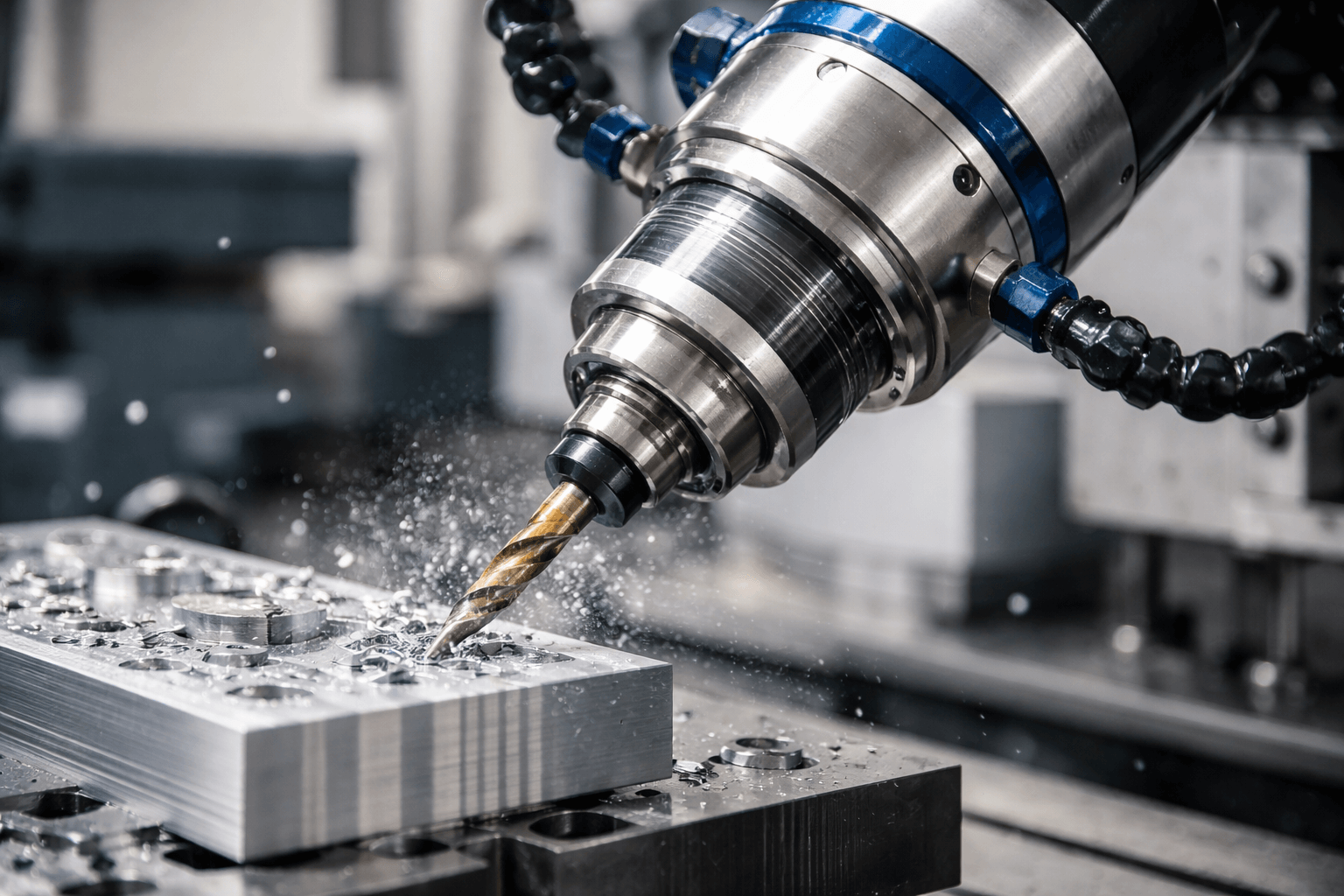
You’re facing a complex machining project where standard drilling tools simply can’t reach those critical angles. Deadlines are looming, quality cannot be compromised, and every rejected part costs your company thousands. You’re not alone. Manufacturing professionals worldwide face this exact challenge daily – until they discover the transformative power of Winkelbohrspindel (angle drilling spindles).
Whether you’re working in automotive manufacturing, aerospace engineering, mold making, or precision tool fabrication, the right angle head spindle can be the difference between meeting impossible specifications and scrapping expensive workpieces. But here’s the problem: with countless variations of angular drilling heads, right-angle drilling units, and adjustable angle spindles flooding the market, how do you choose the right one?
This comprehensive guide draws from decades of industry experience and cutting-edge engineering insights to give you everything you need to know about Winkelbohrspindel technology. By the end, you’ll understand not just what these precision tools are, but exactly how to select, implement, and maintain them for optimal performance in your specific application.
What is a Winkelbohrspindel? Understanding Angle Drilling Spindles
A Winkelbohrspindel (literally “angle drilling spindle” in German) is a specialized machining attachment that allows drilling, milling, tapping, and boring operations at various angles to the machine spindle axis. Unlike conventional straight spindles that only work perpendicular to the workpiece surface, angle head spindles redirect the rotational axis through precision bevel gears or angular transmission systems.
The Engineering Behind Winkelbohrspindel
At its core, every angular drilling head consists of three primary components:
- Housing Assembly: Precision-machined housing that maintains exact geometric tolerances while protecting internal mechanisms from coolant and contamination
- Gear Transmission System: High-precision bevel gears or planetary gear sets that convert the input rotation into the desired output angle, typically at 45°, 90°, or adjustable ranges
- Output Spindle: The rotating shaft that holds the cutting tool, engineered for minimal runout (typically < 0.01mm) to ensure precise machining
Modern right-angle drilling units incorporate advanced materials like hardened steel alloys, precision ceramic bearings, and sophisticated coolant delivery systems that enable operations at speeds exceeding 24,000 RPM while maintaining exceptional accuracy.
How Angle Drilling Spindles Work: Engineering Fundamentals
Understanding the operational mechanics of Winkelbohrspindel systems is crucial for optimal application. The power transmission process involves several sophisticated engineering principles:
Power Transmission Mechanics
- Input Drive Reception: The machine’s main spindle connects to the angle head through a precision taper interface (typically ISO, BT, or HSK taper), transmitting rotational power
- Angular Conversion: Internal bevel gears redirect the rotational axis by the specified angle. In 90° angle heads, spiral bevel gears convert vertical rotation into horizontal movement
- Speed and Torque Adjustment: Depending on gear ratios, the output speed may differ from input. Common ratios include 1:1 (direct drive), 1:2 (speed reduction), or 2:1 (speed increase)
- Precision Bearing Support: Multiple high-precision angular contact bearings support the output spindle, minimizing deflection and ensuring concentricity
- Coolant Integration: Through-tool coolant passages deliver lubrication directly to the cutting edge, essential for deep hole drilling and heat management
The critical performance metric for any adjustable angle spindle is its total indicated runout (TIR). Premium angle drilling attachments achieve TIR values below 0.005mm, enabling tolerances comparable to conventional spindles.
Types of Winkelbohrspindel: Finding Your Perfect Match
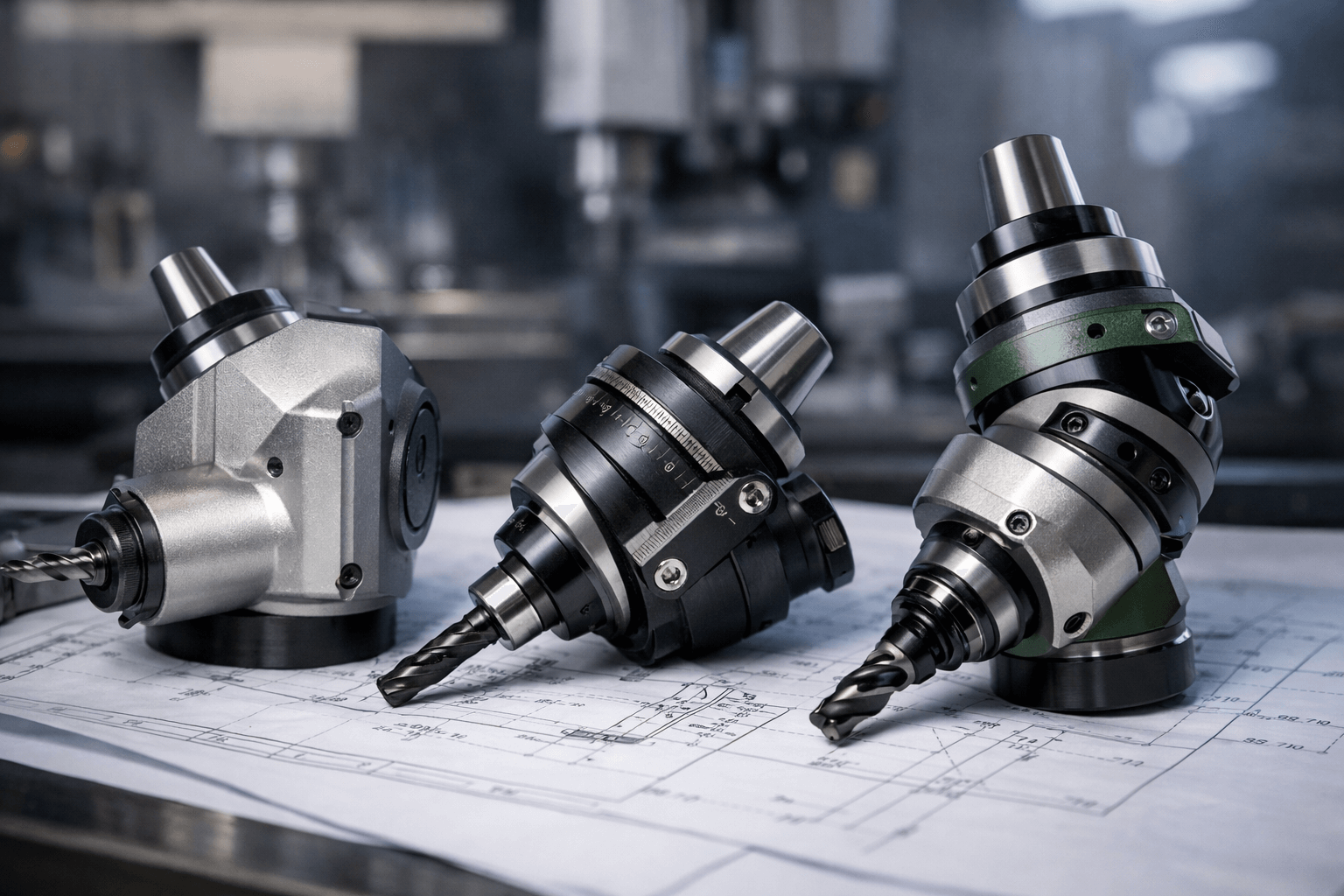
The angle head spindle market offers diverse configurations, each optimized for specific manufacturing scenarios. Understanding these variations is essential for making informed procurement decisions.
Fixed-Angle Drilling Heads
Fixed-angle heads maintain a constant angular relationship (typically 45° or 90°). These right-angle drilling units excel in high-volume production where repeatability trumps flexibility.
- Advantages: Maximum rigidity, superior accuracy, lower cost, minimal setup time
- Applications: Production machining, automotive component drilling, standardized aerospace operations
- Speed Range: Up to 24,000 RPM for high-speed machining
- Typical Use Cases: Engine block drilling, transmission housing machining, bracket production
Adjustable Angle Spindles
Adjustable angular drilling systems offer the versatility to set various angles, typically ranging from 0° to 90° in precise increments. This flexibility makes them ideal for job shop environments and prototype development.
- Advantages: Maximum versatility, single tool for multiple angles, excellent for low-volume high-mix production
- Considerations: Slightly reduced rigidity compared to fixed heads, requires careful setup verification
- Angular Accuracy: Typically ±5 arc-minutes with vernier scales or digital readouts
- Ideal For: Mold and die making, aerospace prototyping, research and development machining
Universal Angle Heads (Multi-Axis)
Universal Winkelbohrspindel units provide adjustment in two planes simultaneously, enabling compound angles essential for complex geometries in 5-axis-equivalent machining on standard 3-axis machines.
- Capability: Adjustment in both horizontal and vertical planes
- Precision: Angular positioning typically within ±0.01° using digital indicators
- Applications: Turbine blade machining, complex mold surfaces, medical implant manufacturing
- Investment Consideration: Premium pricing justified by eliminating need for 5-axis equipment
Key Applications of Angle Head Spindles Across Industries
The versatility of angle drilling attachments has revolutionized manufacturing across multiple sectors. Understanding industry-specific applications helps identify optimization opportunities in your operation.
Automotive Manufacturing
- Engine Block Machining: Cross-drilling for oil galleries and coolant passages where conventional spindles cannot access
- Transmission Housing Production: Angled bore creation for gear shafts and bearing pockets
- Chassis Component Drilling: Bracket mounting holes at complex angles on frame rails
- Critical Success Factor: High-volume production demands maximum uptime – premium Winkelbohrspindel units with robust lubrication systems are essential
Aerospace Engineering
Aerospace components demand extreme precision in exotic materials. Angular drilling heads enable:
- Turbine Component Machining: Angled cooling holes in turbine blades and vanes
- Landing Gear Production: Complex cross-drilling in high-strength steel assemblies
- Wing Spar Drilling: Precision angled fastener holes in aluminum and composite structures
- Material Considerations: Titanium and Inconel machining requires angle heads with enhanced rigidity and thermal management
Mold and Die Manufacturing
Tool and die makers leverage adjustable angle spindles for creating complex cooling channels and ejector pin holes that follow part geometry rather than machine axes.
- Conformal Cooling Channels: Drilled passages that follow part contours for optimal heat transfer
- Angled Ejector Pin Holes: Undercut release mechanisms requiring precise angular placement
- Core and Cavity Detailing: Fine surface finishing at angles inaccessible to standard tools
- Productivity Impact: Reduces setups from multiple operations to single-setup completions
Medical Device Manufacturing
The medical industry’s stringent tolerances and biocompatible material requirements make precision angle drilling indispensable for implant and instrument production.
- Orthopedic Implants: Angled screw holes in bone plates and joint replacements
- Surgical Instruments: Cross-drilling in stainless steel and titanium tool bodies
- Dental Implant Components: Precision angular features in small-diameter workpieces
- Validation Requirements: Medical-grade Winkelbohrspindel systems must provide documented repeatability and traceability
Selection Criteria: Choosing the Right Angular Drilling System
Selecting the optimal Winkelbohrspindel requires systematic evaluation of technical specifications against your application requirements. This decision directly impacts productivity, quality, and total cost of ownership.
Speed Range and Power Requirements
Match the angle head spindle speed capabilities to your machining operations:
- Low-Speed Heavy Duty (500-3,000 RPM): Ideal for drilling large diameters (>25mm) in steel, cast iron, and tough alloys. Maximum torque transmission.
- Medium-Speed General Purpose (3,000-8,000 RPM): Versatile range for most drilling, boring, and light milling operations. Balanced torque and speed.
- High-Speed Precision (8,000-24,000 RPM): Small-diameter drilling (<6mm), finishing operations, and aluminum/composite machining. Emphasizes accuracy over power.
- Critical Consideration: Verify that your machine’s spindle speed range complements the angle head’s gear ratio to avoid operating outside optimal zones.
Accuracy and Repeatability Standards
Precision is paramount in angular machining. Evaluate these accuracy metrics:
- Runout Tolerance: Premium units achieve <0.005mm TIR; standard units 0.01-0.02mm. Lower runout directly translates to better surface finish and dimensional accuracy.
- Angular Positioning Accuracy: Fixed heads maintain ±1 arc-minute; adjustable heads typically ±5 arc-minutes. Critical for aerospace and medical applications.
- Repeatability: After tool changes or angle adjustments, the system should return to position within ±0.002mm. Essential for production environments.
- Bearing Quality: Ceramic hybrid bearings offer superior rigidity and longer life compared to standard steel bearings, particularly at high speeds.
Machine Interface Compatibility
Ensure the right-angle drilling unit interfaces seamlessly with your existing machine tools:
- Spindle Taper Type: Common standards include ISO 30/40/50, BT 30/40/50, CAT 40/50, and HSK-A/E types. Verify exact compatibility.
- Tool Holding System: Through-spindle coolant capability, pull-stud specifications, and tool retention force requirements.
- Weight Limitations: Heavier angle heads may exceed your machine’s tool changer capacity or spindle load limits.
- Envelope Constraints: Verify that the angle head’s extended reach doesn’t interfere with machine enclosure, tool magazine, or workholding fixtures.
Coolant Delivery Systems
Effective coolant management is critical for deep hole drilling and high-performance machining:
- Through-Tool Coolant: Essential for drilling depths exceeding 3x diameter. Requires compatible Winkelbohrspindel with internal passages.
- Pressure Requirements: High-pressure coolant (70-150 bar) enables chip evacuation in deep holes and improves tool life in hard materials.
- External Coolant Options: Flood coolant or mist systems for applications where through-tool delivery isn’t critical.
- Sealing Technology: Premium angle heads use advanced rotary seals to prevent coolant leakage while maintaining bearing lubrication integrity.
Installation and Setup Best Practices

Proper installation of your angle drilling attachment is fundamental to achieving specified performance. Even premium Winkelbohrspindel units will underperform if incorrectly installed.
Pre-Installation Inspection
- Clean all mounting surfaces on both the machine spindle and angle head taper to remove any debris, oil, or oxidation
- Inspect taper surfaces for nicks, burrs, or wear using a precision straightedge and feeler gauge
- Verify pull-stud thread condition and measure pull-force to ensure adequate tool retention
- Check angle head’s output shaft runout before installation to establish baseline measurements
- Review manufacturer’s lubrication specifications and pre-lubricate if specified
Installation Procedure
Follow this systematic approach for angular drilling head installation:
- Step 1: Mount the angle head into the machine spindle using proper handling techniques to avoid damage. Never strike the angle head during installation.
- Step 2: Verify secure seating by checking for complete taper contact – no gap should be visible at the interface.
- Step 3: If applicable, connect coolant supply lines ensuring proper sealing and correct pressure ratings.
- Step 4: Install a precision test indicator or dial gauge at the output spindle and rotate by hand to measure runout.
- Step 5: Acceptable runout should match manufacturer specifications (typically <0.01mm). Excessive runout indicates contamination or taper damage.
- Step 6: Perform a low-speed test run (25% of maximum RPM) for 2-3 minutes, listening for unusual vibration or noise.
- Step 7: Gradually increase to operating speeds while monitoring for temperature rise, vibration, or coolant leaks.
Angular Calibration (Adjustable Heads)
For adjustable angle spindles, precise angular setting is critical:
- Use a precision angle gauge or sine bar to verify angular settings against scale indications
- For digital readout systems, confirm zero position using a precision square or angle block
- Document any offset between scale readings and actual angles for operator reference
- Lock all adjustment mechanisms firmly after setting the desired angle
- Re-verify angle after locking to ensure no shift occurred during tightening
- Create a calibration record including date, angles verified, and any corrections needed
Maintenance and Troubleshooting Guide
Systematic maintenance extends Winkelbohrspindel service life and preserves accuracy. A well-maintained angle head can provide decades of reliable service.
Preventive Maintenance Schedule
Daily Maintenance
- Clean external surfaces to remove chips and coolant residue
- Inspect coolant connections for leaks or looseness
- Verify output shaft rotation is smooth with no unusual resistance
- Check for any abnormal heat buildup during operation
Weekly Maintenance
- Measure output spindle runout and compare to baseline measurements
- Inspect taper interface for wear, fretting, or contamination
- Verify angular settings haven’t drifted (adjustable heads)
- Clean or replace coolant filters if equipped
Monthly Maintenance
- Perform complete external cleaning and inspection
- Check lubrication levels (if applicable) and top up as needed
- Inspect all fasteners and locking mechanisms for proper torque
- Review production quality trends to identify any accuracy degradation
Annual Maintenance
- Complete disassembly, inspection, and rebuild by qualified technician
- Replace all seals, gaskets, and lubricants
- Measure and document all critical dimensions and clearances
- Perform precision runout testing and angular accuracy verification
- Update calibration records and maintenance history
Common Problems and Solutions
Recognize and resolve these frequent angle head spindle issues:
Excessive Runout or Poor Surface Finish
- Causes: Contaminated taper interface, worn bearings, damaged output shaft, loose tool holding
- Solutions: Clean and inspect taper surfaces thoroughly, replace worn bearings, verify tool holder concentricity, check pull-stud retention force
Vibration or Noise During Operation
- Causes: Worn or damaged gears, insufficient lubrication, bearing failure, unbalanced tool holder
- Solutions: Inspect gears for pitting or wear, service lubrication system, replace degraded bearings, balance or replace tool holder
Coolant Leakage
- Causes: Failed rotary seals, damaged O-rings, excessive coolant pressure, loose fittings
- Solutions: Replace worn seals using OEM parts, verify coolant pressure within specifications, tighten or replace fittings with proper torque
Angular Inaccuracy
- Causes: Worn adjustment mechanisms, loose locking systems, thermal expansion, improper calibration
- Solutions: Recalibrate using precision angle standards, tighten all locking mechanisms to specified torque, allow thermal stabilization before precision work, replace worn adjustment components
Performance Optimization Techniques
Maximize Winkelbohrspindel performance through these advanced optimization strategies:
Optimizing Cutting Parameters
Angular machining requires modified cutting parameters compared to conventional operations:
- Speed Adjustment: Reduce surface speed by 10-15% when using angle heads due to gear transmission losses and heat generation in the gearbox
- Feed Rate Optimization: Start conservative (50-75% of standard rates) and increase based on performance. Angled operations may require reduced feeds due to altered chip formation
- Depth of Cut: For drilling through angle heads, limit depth to 3-4x diameter per pass to prevent chip packing and ensure adequate coolant delivery
- Tool Selection: Use tools specifically designed for angle head applications – shorter length/diameter ratios provide better rigidity and reduce deflection
Maximizing Tool Life
Extend cutting tool life in angular drilling operations:
- Use Rigid Tool Holders: Hydraulic or shrink-fit holders provide superior grip and concentricity compared to collet systems
- Optimize Coolant Delivery: High-pressure through-tool coolant (70+ bar) dramatically improves chip evacuation and heat removal
- Implement Peck Drilling Cycles: For holes deeper than 3x diameter, use peck cycles to break chips and clear the hole
- Monitor Tool Wear: Angled operations can accelerate wear on specific tool edges – rotate or index tools strategically
- Consider Coated Tools: TiAlN, AlTiN, or DLC coatings reduce friction and heat in the challenging environment of angular machining
Enhancing Accuracy
Achieve tighter tolerances with right-angle drilling units:
- Thermal Management: Allow the angle head to reach thermal equilibrium before precision machining – typically 15-20 minutes of warm-up at operating speed
- Minimize Overhang: Use the shortest practical tool length to reduce deflection and vibration
- Workpiece Clamping: Ensure rigid workholding – vibration in the workpiece amplifies at the angled tool interface
- Compensate for Tool Deflection: Program offsets to account for predictable tool deflection based on cutting forces
- Regular Calibration: Verify angular accuracy and runout monthly in production environments to catch degradation early
Common Mistakes and How to Avoid Them
Learn from these frequent angle drilling attachment pitfalls to avoid costly mistakes:
Mistake #1: Ignoring Gear Ratio in Speed Calculations
Many operators forget that angle heads with gear reduction or multiplication alter effective cutting speeds. A 2:1 reduction means your 6,000 RPM spindle speed delivers only 3,000 RPM at the tool. Always calculate actual tool RPM based on the gear ratio.
Mistake #2: Inadequate Warm-Up Time
Jumping directly to high-speed precision work without thermal warm-up causes dimensional errors. Gears, bearings, and housing materials expand at different rates. Allow 15-20 minutes at 75% operating speed before critical operations.
Mistake #3: Over-Tightening Adjustment Locks
Excessive torque on adjustment mechanisms can distort housing geometry, affecting accuracy. Use calibrated torque wrenches and follow manufacturer specifications – typically 20-30 Nm for most locking screws.
Mistake #4: Neglecting Coolant System Maintenance
Clogged coolant passages cause overheating, premature bearing failure, and galling. Clean filters weekly and flush internal passages monthly with soluble oil cleaner.
Mistake #5: Using Incorrect Tool Holders
Standard ER collet holders lack rigidity for angle head applications. Invest in hydraulic, shrink-fit, or precision milling chucks designed for lateral loads.
Mistake #6: Exceeding Speed Ratings
Operating beyond specified RPM limits accelerates bearing wear exponentially and risks catastrophic failure. Respect manufacturer speed limits – they’re based on extensive testing.
Mistake #7: Improper Storage
Storing angle heads in damp or dirty environments invites corrosion and contamination. Store in a clean, dry location with taper protection covers installed.
Future Trends in Angle Drilling Technology
The Winkelbohrspindel industry is evolving rapidly with these emerging technologies:
Smart Angle Heads with IoT Integration
Next-generation angle head spindles incorporate embedded sensors and wireless connectivity:
- Real-Time Monitoring: Temperature, vibration, and load sensors provide continuous condition data
- Predictive Maintenance: AI algorithms analyze sensor data to predict bearing failures before they occur
- Automatic Parameter Adjustment: Adaptive systems modify cutting parameters based on actual cutting forces and tool wear
- Digital Twin Technology: Virtual models simulate angle head performance for optimization before physical implementation
Advanced Materials and Coatings
- Ceramic Bearing Systems: Full ceramic bearings enable speeds exceeding 30,000 RPM with superior thermal stability
- Carbon Fiber Reinforced Housings: Lightweight composite materials reduce mass while maintaining rigidity
- Diamond-Like Carbon (DLC) Coatings: Internal surface coatings reduce friction and extend lubrication intervals
- Additive Manufacturing: 3D-printed conformal cooling channels optimize thermal management
Automation and Industry 4.0 Integration
Modern angular drilling systems integrate seamlessly with smart manufacturing:
- Automatic Tool Recognition: RFID chips identify specific angle heads and load appropriate cutting parameters
- Cloud-Based Analytics: Performance data uploads to cloud platforms for fleet-wide optimization
- Augmented Reality Setup: AR applications guide operators through complex angle head setup procedures
- Blockchain Traceability: Immutable records of maintenance, calibration, and usage for compliance industries
Frequently Asked Questions (FAQ)
Can I use a Winkelbohrspindel for milling operations?
Yes, many angle head spindles support both drilling and light milling operations. However, verify that your specific model is rated for side loads. Milling generates lateral forces that drilling doesn’t, requiring enhanced bearing capacity and rigidity. Consult manufacturer specifications for maximum permissible cutting forces.
How often should I replace the lubricant in my angle head?
Lubrication intervals vary by model and usage intensity. Sealed-for-life angle heads require no maintenance, while serviceable units typically need oil changes every 500-1000 operating hours. High-speed or heavy-duty applications may require more frequent service. Always follow OEM recommendations.
What’s the difference between a right-angle head and a universal angle head?
A right-angle head provides a fixed 90° orientation, offering maximum rigidity for specific applications. A universal angle head adjusts in two planes, enabling compound angles but with slightly reduced rigidity. Universal heads cost 30-50% more but eliminate the need for multiple fixed-angle heads.
Can angle drilling attachments reduce machining time?
Absolutely, Angle heads eliminate multiple setups and workpiece repositioning. For complex parts requiring holes at various angles, a single-setup solution using an adjustable Winkelbohrspindel can reduce cycle time by 40-60% compared to multiple setups on a conventional 3-axis machine.
Are cheap angle heads worth the savings?
Economy angle heads sacrifice precision, durability, and support. Poor runout accuracy (>0.05mm) causes quality issues and tool breakage. Inferior bearings fail prematurely, resulting in costly downtime. Premium units from reputable manufacturers provide 10-15 years of reliable service – budget units rarely last 2-3 years in production environments.
How do I determine the correct gear ratio for my application?
Match gear ratio to your application: 1:1 (direct drive) for general-purpose work maintaining machine spindle speeds; 1:2 or 1:3 (speed reduction) for high-torque applications like large diameter drilling in steel; 2:1 or 3:1 (speed increase) for small diameter drilling or finishing operations in soft materials.
Can angle heads work with through-spindle coolant systems?
Most modern Winkelbohrspindel units accommodate through-spindle coolant, but verify compatibility. The coolant passages must route through the gear mechanism to the output spindle. Pressure ratings vary – typically 30-70 bar for standard units, up to 150 bar for high-pressure capable models.
What causes poor surface finish when using angle drilling heads?
Common causes include excessive runout (check taper cleanliness), incorrect speeds/feeds (remember to account for gear ratios), worn cutting tools, inadequate coolant delivery, or insufficient warm-up time. Start by verifying runout is within specification (<0.01mm for precision work).
Conclusion: Making Your Investment Count
The right Winkelbohrspindel transforms manufacturing limitations into competitive advantages. Whether you’re producing complex aerospace components, high-volume automotive parts, or precision medical devices, angle drilling technology enables geometries and efficiencies impossible with conventional machining.
Success with angular drilling systems requires understanding the fundamental technology, selecting the appropriate configuration for your specific needs, implementing proper installation and setup procedures, and maintaining rigorous preventive maintenance schedules. The investment in a premium angle head spindle pays dividends through improved quality, reduced setup times, and expanded machining capabilities.
As manufacturing continues evolving toward greater complexity and tighter tolerances, Winkelbohrspindel technology will only become more critical. Smart features, advanced materials, and Industry 4.0 integration are making these tools more capable, reliable, and valuable than ever before.
