



So here’s the thing – I was scrolling through job listings last month, feeling pretty down. Every decent position wanted skills I didn’t have. Python? Nope. Digital marketing? Not really. Project management certification? Yeah, right.
And then came the gut punch: I looked up how much these courses cost. $500 here, $1,200 there, $49/month subscriptions that somehow never get canceled. My bank account laughed at me. Seriously laughed.
Maybe you know this feeling too? You want to learn something new, change careers, or just not feel left behind – but every door seems to have a price tag on it. It’s frustrating as hell.
That’s when my cousin texted me about CourseLinkFree.us. I rolled my eyes at first (another “free” thing that’s not actually free, right?), but man… I was wrong. Dead wrong.
Let me tell you everything I’ve learned about this platform over the past few months. The good stuff, the weird stuff, and whether it’s actually worth your time.
What Even Is CourseLinkFree.us?
Okay, so Courselinkfree.us isn’t like Netflix for courses (though that would be cool). Think of it more like Google, but specifically for free online courses.
Here’s how it works: Instead of creating their own courses, they’ve basically hunted down every decent free learning resource on the internet and put them all in one place. It’s like they did the boring work of searching so you don’t have to.
You go to their site, search for what you want to learn – let’s say “graphic design” – and boom, you get a list of actual free courses from real platforms like Coursera, edX, Khan Academy, and others. Click the one you want, and it takes you straight there.
No signup on CourseLinkFree.us itself. No credit card. No “free trial that charges you next month” nonsense.
Why Does This Matter?
Because normally, finding free courses is like looking for your keys when you’re already late. You Google it, get a million results, half are scams, some are outdated from 2015, and you waste an hour just trying to figure out what’s legit.
CourseLinkFree.us basically cuts through all that noise. They’ve already vetted stuff, organized it, and made it searchable. Simple.
What Kind of Courses Are We Talking About?
This is where it gets interesting. I thought it’d be basic stuff – you know, “Intro to Microsoft Word” or whatever. But nope, there’s actually serious content here.
Tech Stuff (If You’re Into That)
- Programming languages – Python, JavaScript, all that coding stuff
- Web development– building actual websites
- Data science (apparently everyone needs this now?)
- Cybersecurity basics
- Even AI and machine learning for beginners
Business and Career Growth
- Project management courses (useful for literally any job)
- Leadership skills
- How to start a business without losing your mind
- Professional development workshops
- Public speaking (still terrifying, but hey)
Creative Things
- Graphic design
- Photography
- Writing (creative and business writing)
- Video editing
- Music production basics
Random But Cool Stuff
- Learning new languages (Spanish, French, Mandarin, whatever)
- Health and fitness courses
- Personal finance (wish I’d taken this earlier)
- Psychology and mental health
- History, philosophy, science – basically anything you’d study in college
The variety honestly surprised me. It’s not just tech courses trying to turn everyone into programmers.
My Actual Experience Using It
Let me walk you through what happened when I first used Courselinkfree.us.
The Search
I wanted to learn digital marketing because every job posting mentions it. Went to the site, typed “digital marketing” in the search bar. Got like 30+ results.
Each one showed:
- What the course covers
- How long it takes (some said 4 weeks, others said 6 months)
- What level it’s for (beginner, intermediate, advanced)
- Ratings from other people who took it
Picking a Course
I picked one from Google’s Digital Garage (didn’t even know Google offered free courses, but apparently they do). Clicked the link, got taken straight to Google’s site, signed up for free – like actually free, no payment info needed – and started.
The Learning Part
Here’s what nobody tells you: Free courses require more discipline than paid ones. There’s no professor breathing down your neck, no deadlines making you panic at 2 AM, no money lost if you quit.
I’ll be honest – I started three courses and only finished one the first month. But that’s on me, not the platform.
The course itself was solid. Videos were clear, exercises made sense, and I actually learned how SEO works (it’s less mysterious than it sounds).
The Real Benefits (From Someone Who’s Actually Used It)
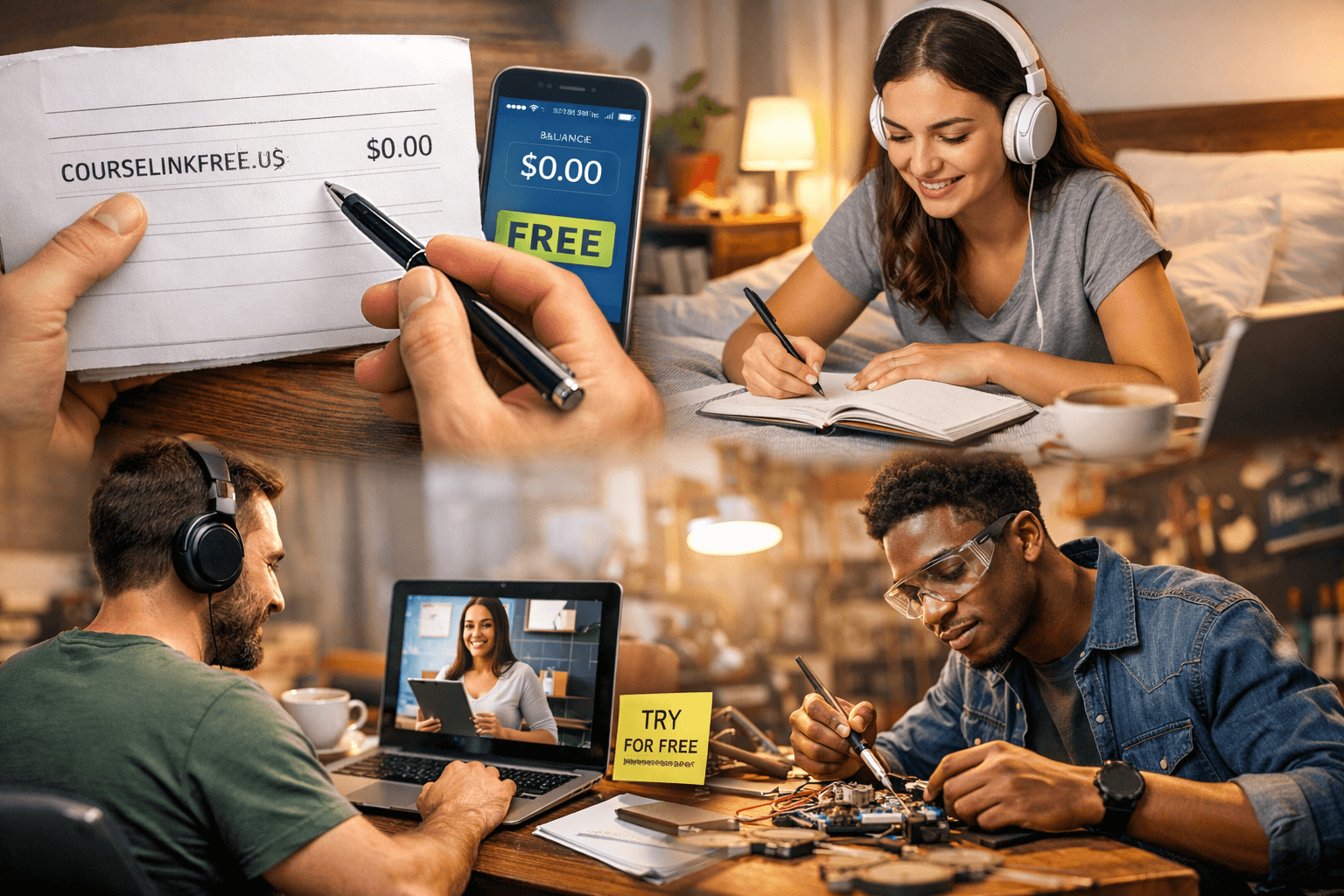
1. It’s Actually Free (I Checked My Bank Statement)
Look, I’m suspicious by nature. I kept waiting for the charge to hit my account. Never came. Some courses offer paid certificates at the end (like $50 for a certificate saying you completed it), but the learning part? Completely free. You can just say no to the certificate and still get all the knowledge.
2. Learning on Your Schedule
I work weird hours. Sometimes I’m free at 2 PM, sometimes at 11 PM. Traditional classes would never work for me. With CourseLinkFree.us courses, I could watch a video during lunch, do an exercise after work, and review stuff on weekends. Nobody cares when you log in. It’s self-paced learning, which sounds fancy but just means “do it whenever.”
3. Try Before You Commit
Want to know if you’d like programming before spending $10K on a bootcamp? Take a free Python course first. Thinking about a career in marketing? Test it out with free courses before quitting your job.
This “try before you buy” approach saved me from making at least one expensive mistake. I thought I wanted to learn data science until I actually started a course and realized I hate working with spreadsheets.
4. Building Real Skills
I’m not gonna lie and say these courses will make you an expert overnight. They won’t. But they’re legit starting points. After finishing that digital marketing course and two more on social media, I actually understood what people meant when they talked about “engagement rates” and “conversion funnels” at work.
I started applying it to my company’s social media, got noticed by management, and now I’m doing more marketing work (with a slight pay bump). Did Courselinkfree.us magically change my life? No. But it gave me tools I actually used.
How Does This Compare to Other Stuff?
People always ask me: “Why not just use Coursera?” or “Isn’t Khan Academy better?”
Here’s my take:
CourseLinkFree.us vs Coursera
Coursera has amazing courses from top universities. Love that. But most of them cost money now. You can audit some for free (meaning watch videos but can’t do graded assignments), but it’s confusing to figure out what’s actually free. Courselinkfree.us shows you what’s completely free upfront. No guessing, no fine print surprises.
CourseLinkFree.us vs Udemy
Udemy has courses on everything, and they’re always “on sale” for $15-20. Which is cheap, sure, but when you’re broke, even $15 matters. Plus, there’s so much choice you get paralyzed deciding what to buy.
With CourseLinkFree.us, since everything’s free, you can just try stuff without the “what if I waste my money” anxiety.
CourseLinkFree.us vs YouTube
YouTube has free tutorials on everything! And I use YouTube all the time. But it’s chaotic. You don’t know if the person teaching you actually knows what they’re talking about, courses aren’t structured, and you end up watching 47 random videos without learning anything properly.
Courselinkfree.us courses are organized, have actual curriculums, and come from established sources. It’s like the difference between randomly Googling health symptoms and seeing an actual doctor.
Real Talk: The Downsides
I’m not getting paid to write this (sadly), so let me be honest about the not-so-great parts:
1. Not Everything Is Actually “Free”
Some courses listed are free to watch but charge for certificates or assignments. It’s not CourseLinkFree.us‘s fault – that’s just how the original platforms work – but it can be confusing. Always read the course details before getting excited.
2. Course Quality Varies
Some courses are from Harvard and MIT. Others are from… well, less impressive sources. The ratings help, but sometimes you start a course and it’s just boring or outdated. I’ve quit courses 20 minutes in because the instructor had the charisma of a potato.
3. No Hand-Holding
You’re on your own with motivation. No classmates to study with, no professor to ask questions, no schedule forcing you to keep up.
If you’re the type who needs external pressure to get stuff done, this might be tough. I definitely struggled with this.
4. Certificate Confusion
Employers are weird about free online courses. Some respect them, others think “if it’s free, it’s not valuable.”
I’ve found the best approach is learning the skill, then proving you have it (build a portfolio, do projects, etc.) rather than just waving a certificate around.
Who Should Actually Use This?
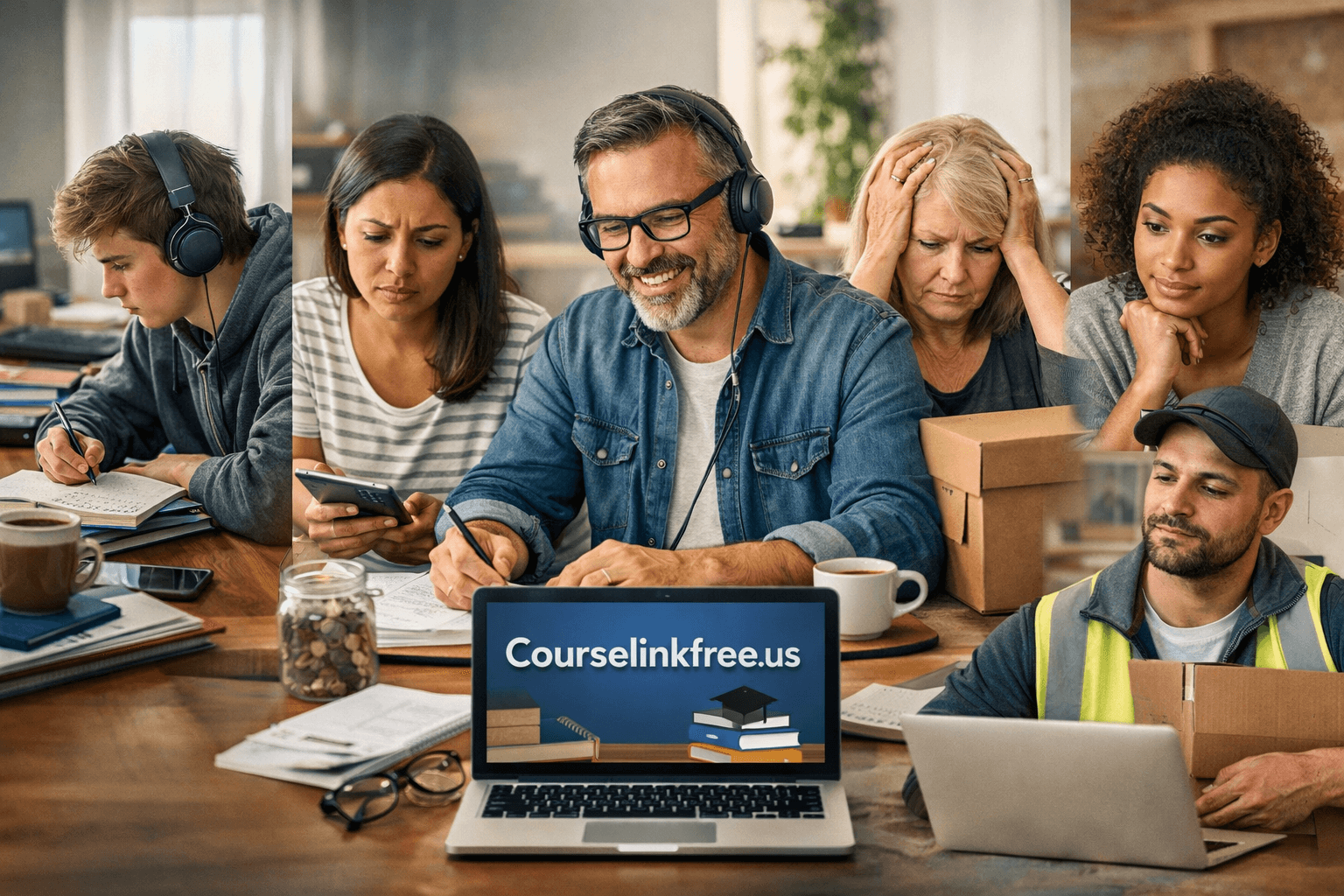
Based on my experience and people I’ve talked to, Courselinkfree.us works best for:
Students Who Are Broke
College is expensive enough. Why pay extra for skills you can learn free? Use this for stuff your college doesn’t teach, like practical coding or digital marketing.
People Considering a Career Change
Before you spend thousands on a career change, test the waters. Take some courses in your potential new field. If you hate it, you’ve lost nothing but time.
Professionals Who Need to Upskill
Your job’s changing, and you need to keep up? These courses help you stay relevant without going broke or going back to school.
Curious People
Maybe you just want to learn stuff. That’s cool too. Learn photography, study philosophy, pick up a language. Knowledge doesn’t always need a career purpose.
People Who Got Laid Off
This was me last year (different job). Instead of panicking, I spent my job search time learning new skills. Made me way more marketable and less depressed about being unemployed.
My Practical Tips for Getting the Most Out of It
After months of using Courselinkfree.us, here’s what actually works:
1. Start With ONE Course
Don’t be like me and sign up for 17 courses in one night thinking you’ll become a genius. You won’t. You’ll get overwhelmed and quit all of them. Pick one. Finish it. Then do another.
2. Treat It Like a Real Class
Set specific times to study. I do Monday, Wednesday, Friday at 7 PM. It’s in my calendar. I treat it like an appointment I can’t skip. Otherwise, “I’ll do it later” turns into “I never did it.”
3. Tell Someone You’re Doing It
I told my roommate I was taking a course. Every few days he’d ask “how’s the course going?” and I couldn’t say “oh I quit after two days” without feeling like a loser. Accountability helps. Tell a friend, post about it, whatever works.
4. Actually Do the Exercises
Don’t just watch videos. Do the practice problems, build the projects, write the essays. That’s where actual learning happens. I can watch 100 hours of cooking shows and still burn toast. Same with courses – watching isn’t learning.
5. Apply It Immediately
Learn about social media marketing? Try it on your personal Instagram. Learn coding? Build a simple website. Learn graphic design? Make a poster for your friend’s band. Using the skill right away makes it stick.
Success Stories (That Aren’t Made Up)
My Cousin Jessica
She’s the one who told me about CourseLinkFree.us. Jessica was stuck in retail management, hating life. Took a bunch of web development courses over six months while working full-time.
Built a portfolio of practice websites, applied to junior developer positions, and eventually got hired. Now she works from home, makes more money, and actually enjoys her job. Did it take effort? Yeah, tons. But she spent zero dollars on education.
My Coworker Mike
Mike’s in his 50s and was terrified of getting replaced by younger people who “understand technology better.” Started taking courses on Excel, data analysis, and project management. Now he’s the go-to person in our department for that stuff. Went from feeling obsolete to feeling confident.
Me, I Guess
I’m not going to pretend I went from zero to hero. I didn’t. But I went from feeling stuck and useless to having actual marketable skills.
I’ve taken courses in digital marketing, basic coding (decided it’s not for me), project management, and content writing. Some of this helped me at my current job, some I’m building toward a side business.
Point is: I’m moving forward instead of standing still. And it didn’t cost me anything except time and effort.
Common Questions People Actually Ask Me
Is this a scam?
No. I was suspicious too, but it’s legit. They’re not trying to steal your info or charge you secretly. It’s just a directory of actual free courses.
Will employers take these seriously?
Depends on the employer and how you present it. Don’t just list course names on your resume – that looks weak. Instead, talk about what you built or did with the knowledge.
“Completed Python course” = meh.
“Built three web applications using Python” = way better.
How much time does this take?
Totally depends on the course and your pace. Some are 3-5 hours total, others are months-long programs.
I usually dedicate 30 minutes a day on weekdays. That’s doable for most people.
Can I really learn without a teacher?
Yes and no. You can learn information and skills, definitely. But you miss out on:
- Asking questions in real-time
- Getting personalized feedback
- The social aspect of learning
It’s a trade-off. Free but solitary vs. expensive but supported.
What if I start and quit?
So what? It’s free. You’re not out any money. Try again when you’re ready. I’ve quit probably 10 courses. Finished 4 completely. Started 2 more I’m working on now. Nobody’s judging. This isn’t school.
The Bigger Picture: Why This Matters
Here’s something that gets me fired up: education shouldn’t be this impossible luxury. My dad never went to college because his family couldn’t afford it. Worked construction his whole life. Great guy, but always wondered “what if?”
Now? Someone like my dad could learn accounting, programming, business management, whatever – for free. That’s huge. CourseLinkFree.us and platforms like it are changing who gets to learn and who gets left behind. It’s not perfect, but it’s something.
Yeah, you still need discipline. Yeah, you need internet access. Yeah, not everyone has time. But the financial barrier is gone, and that matters.
My Final Honest Opinion
Courselinkfree.us isn’t a magic solution. It won’t hand you a new career or make you an expert overnight. It’s just a tool – a really useful, free tool.
If you’re:
- Curious about learning something new
- Broke but ambitious
- Wanting to change careers without going into debt
- Trying to stay relevant in your field
- Just bored and want to challenge your brain
…then yeah, check it out. You’ve got nothing to lose except time, and you’re probably wasting that on social media anyway (no judgment, same).
Start small. Pick one course. Give it a real shot. See what happens. Worst case? You spend a few hours learning something and decide it’s not for you.
Best case? You develop a new skill that changes your life, career, or just makes you more interesting at parties. Either way, your bank account stays intact.
Ready to Start? Here’s What to Do Right Now
- Go to us(just type it in Google if you’re lazy like me)
- Think about one skill you wish you had – just one
- Search for it on the site
- Read the course descriptions and ratings
- Pick one that fits your schedule and skill level
- Click the link and actually sign up (don’t just bookmark it “for later”)
- Schedule your first study session in your calendar right now
- Tell someone you’re doing it
That’s it. Stop overthinking. Just start.
Last Thought
Look, I’m not saying Courselinkfree.us will solve all your problems or turn you into a millionaire. I’m not promising you’ll love every course or finish everything you start.
What I am saying is this: having access to free education on basically any topic you can think of is pretty amazing. We live in a weird time where you can learn university-level skills from your couch at 3 AM in your pajamas without spending a cent.
Take advantage of it. Or don’t. Either way, the option’s there. Me? I’m currently halfway through a course on content writing and just started one on basic graphic design. Not because I have to, but because I want to. And I can. For free.
That still feels kind of unreal. Your move. Go check out CourseLinkFree.us and see what you can learn today. Seriously, what are you waiting for?
